JULIUS CAESAR
By William Shakespeare | Directed and Adapted by Philip Cullen | Produced by Wylde Laden
Northwestern University, Struble Theatre | May 2025

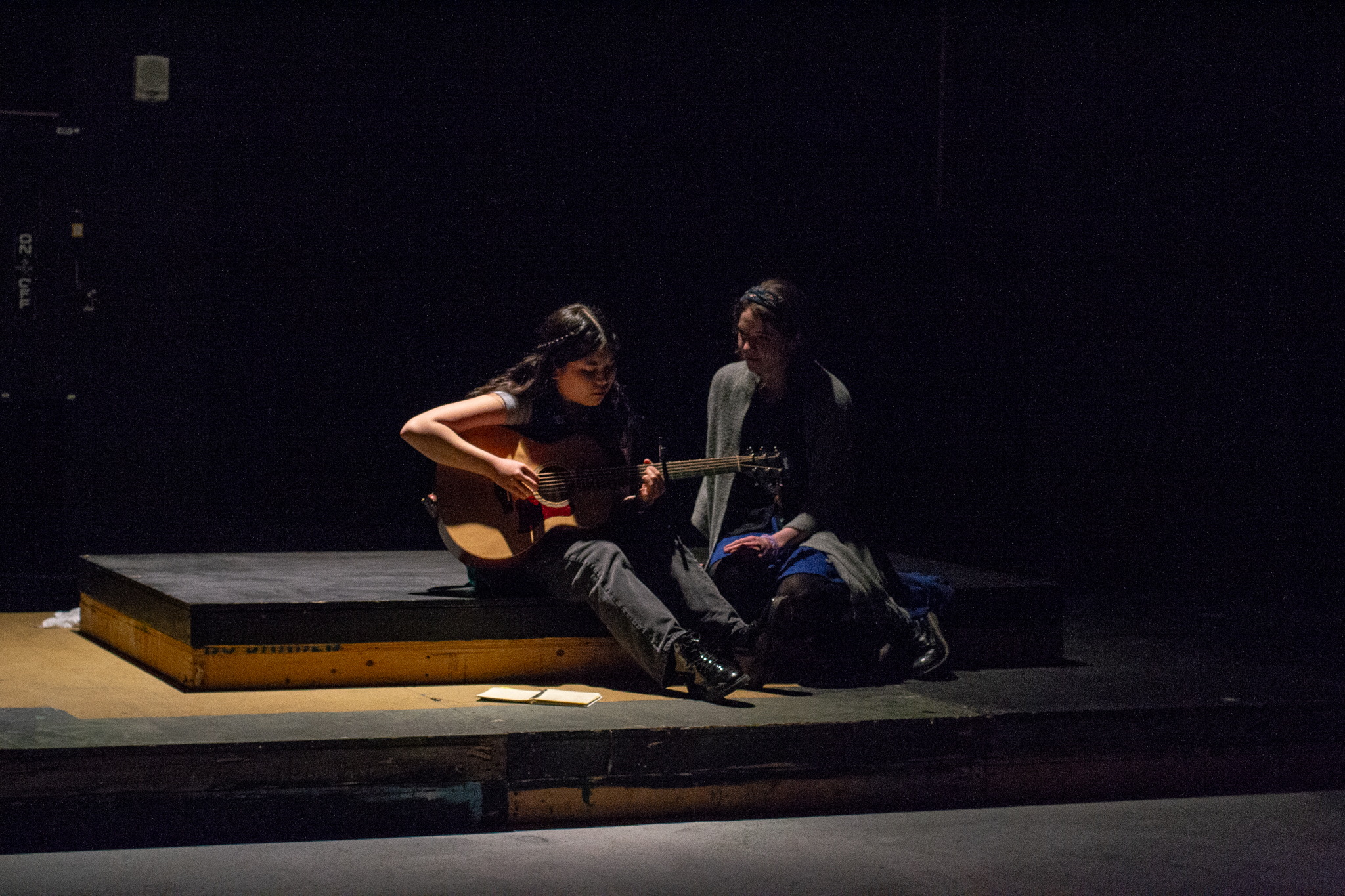
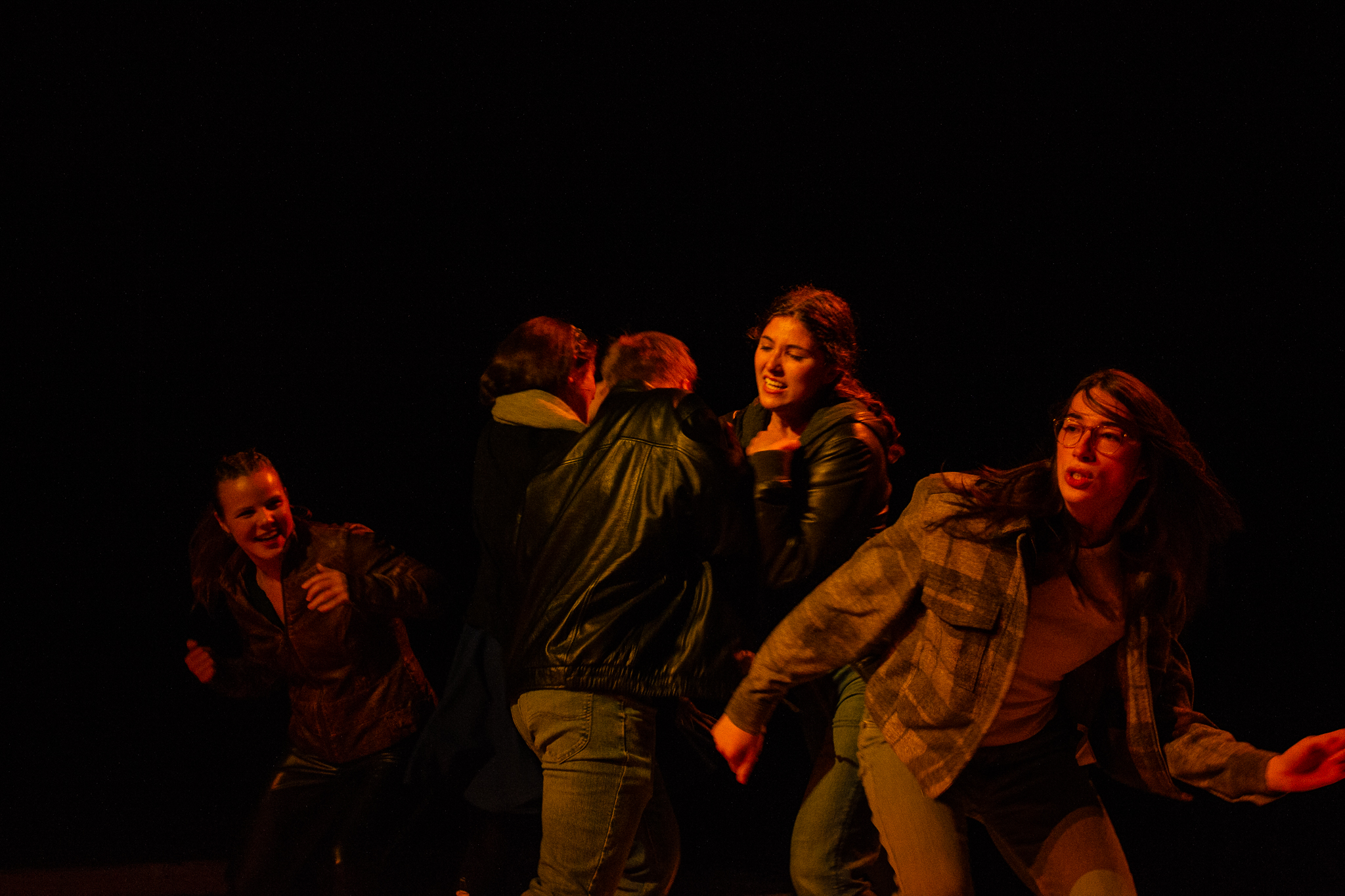
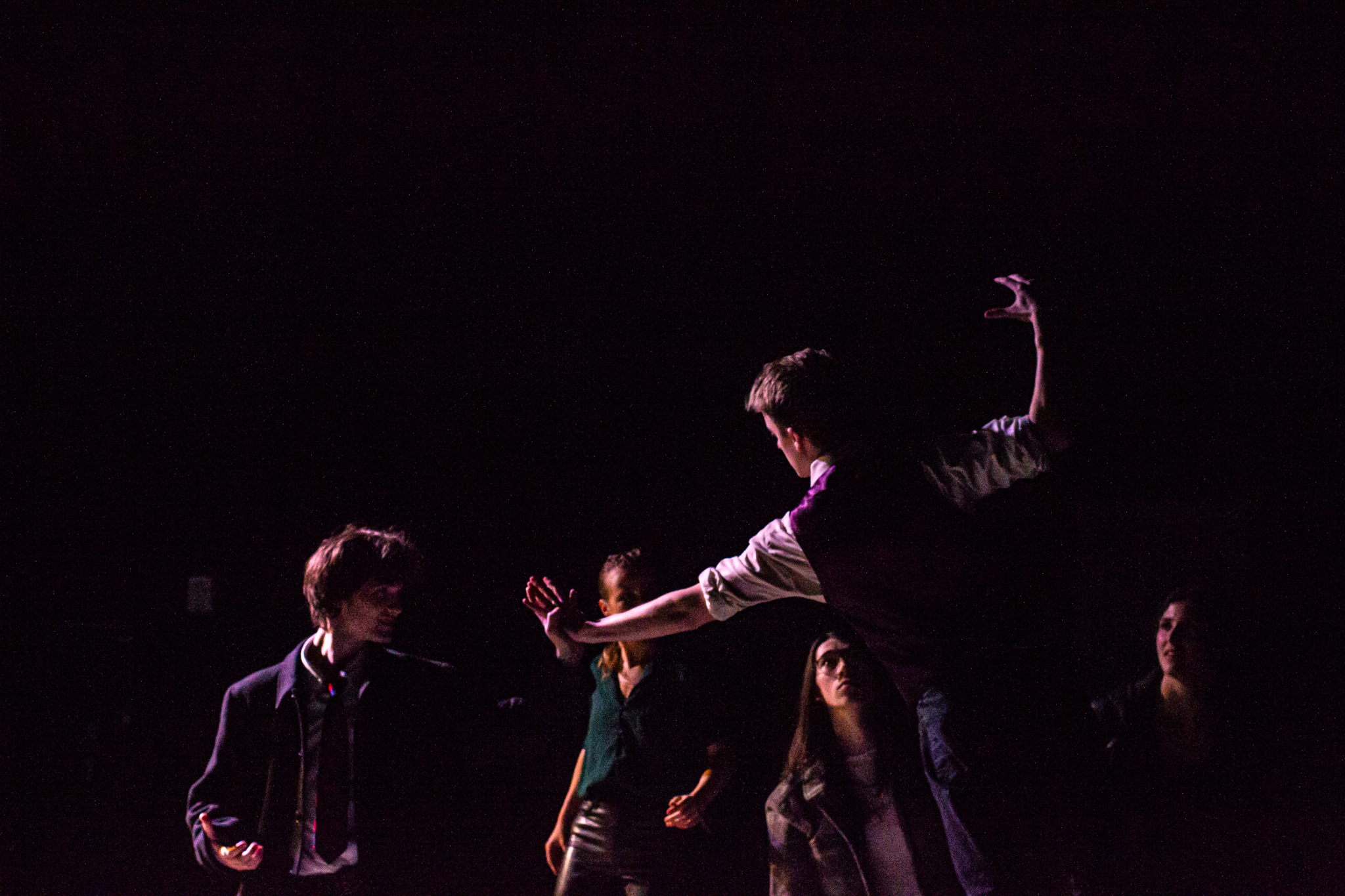
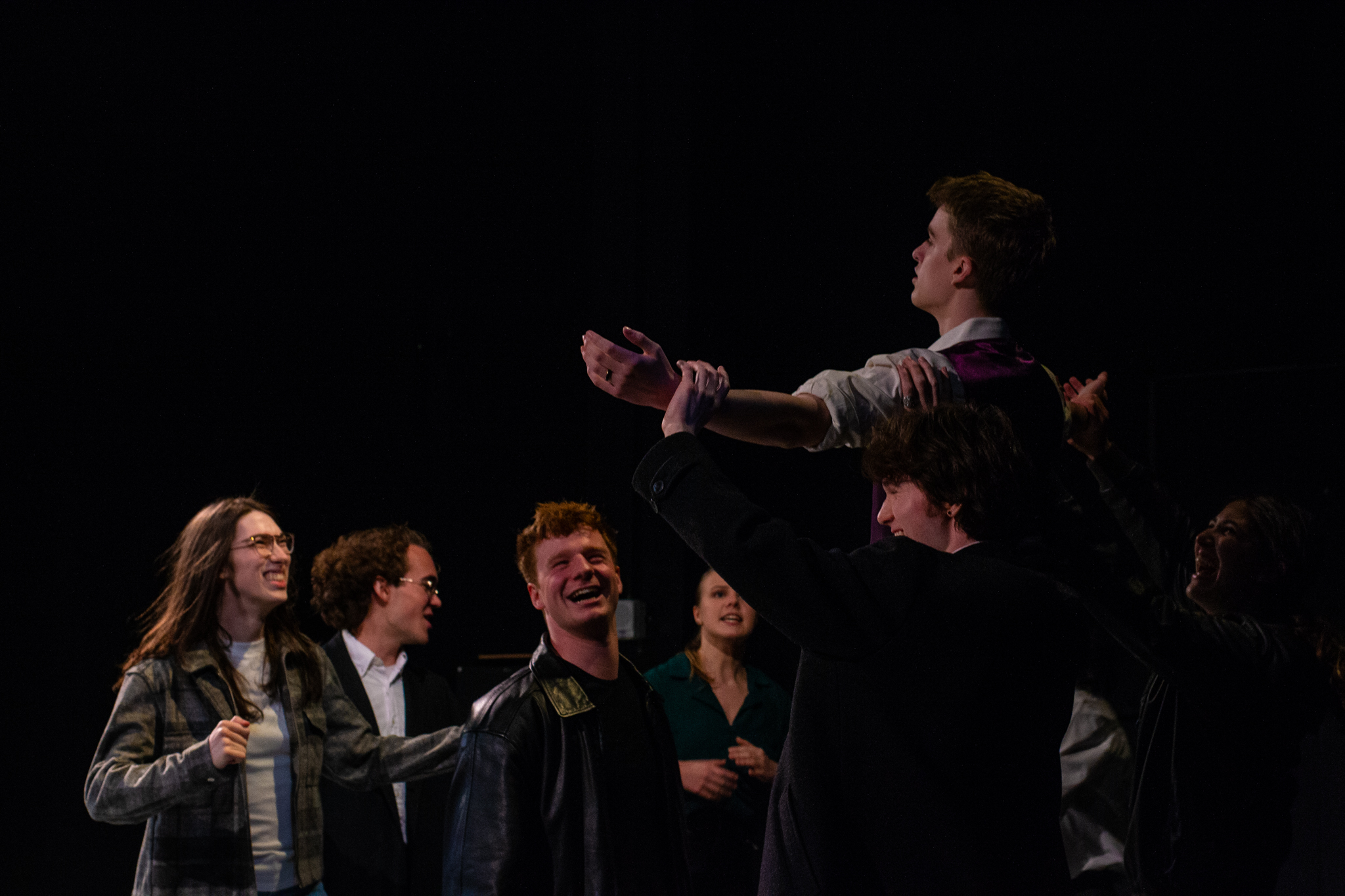
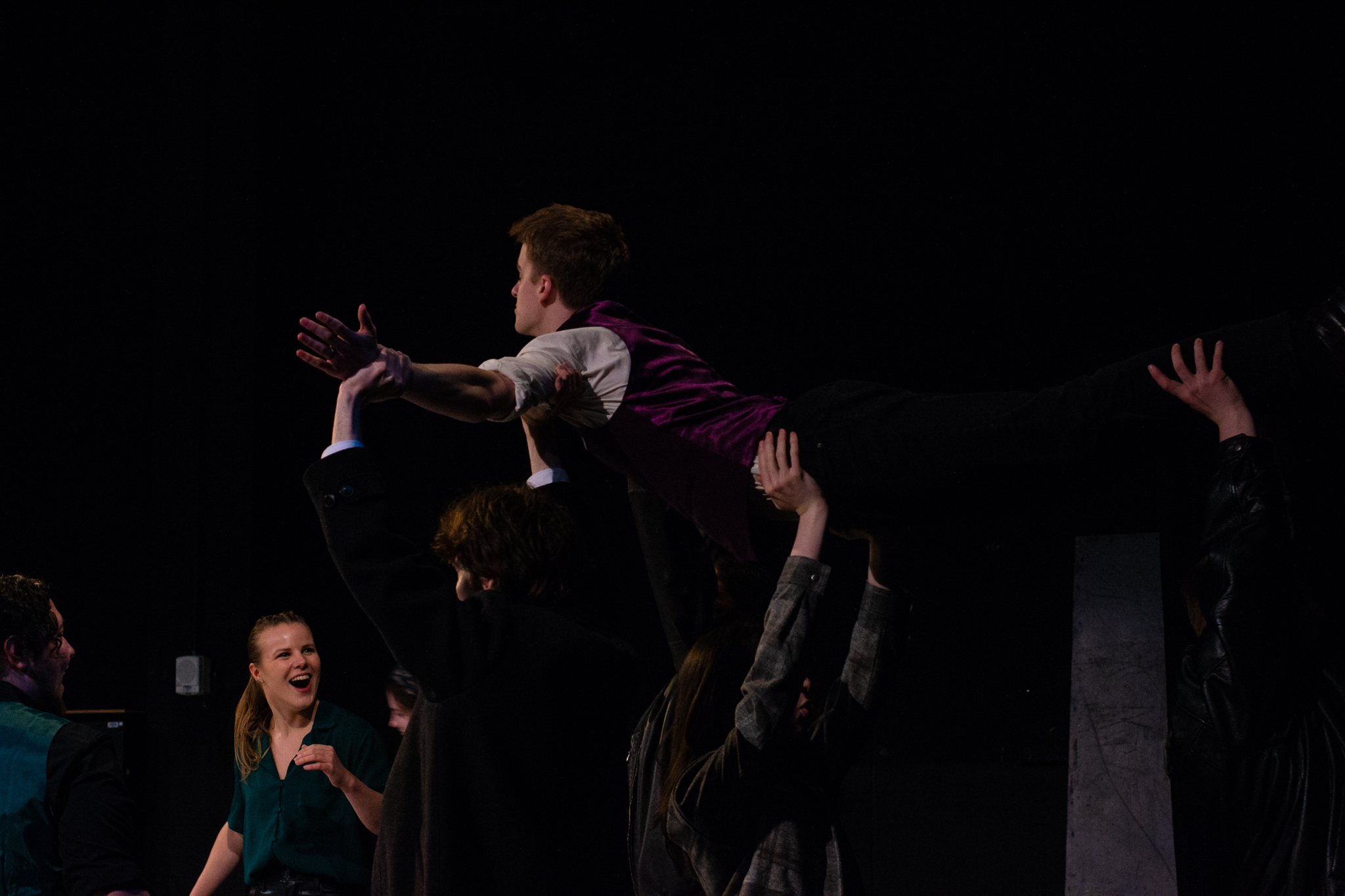
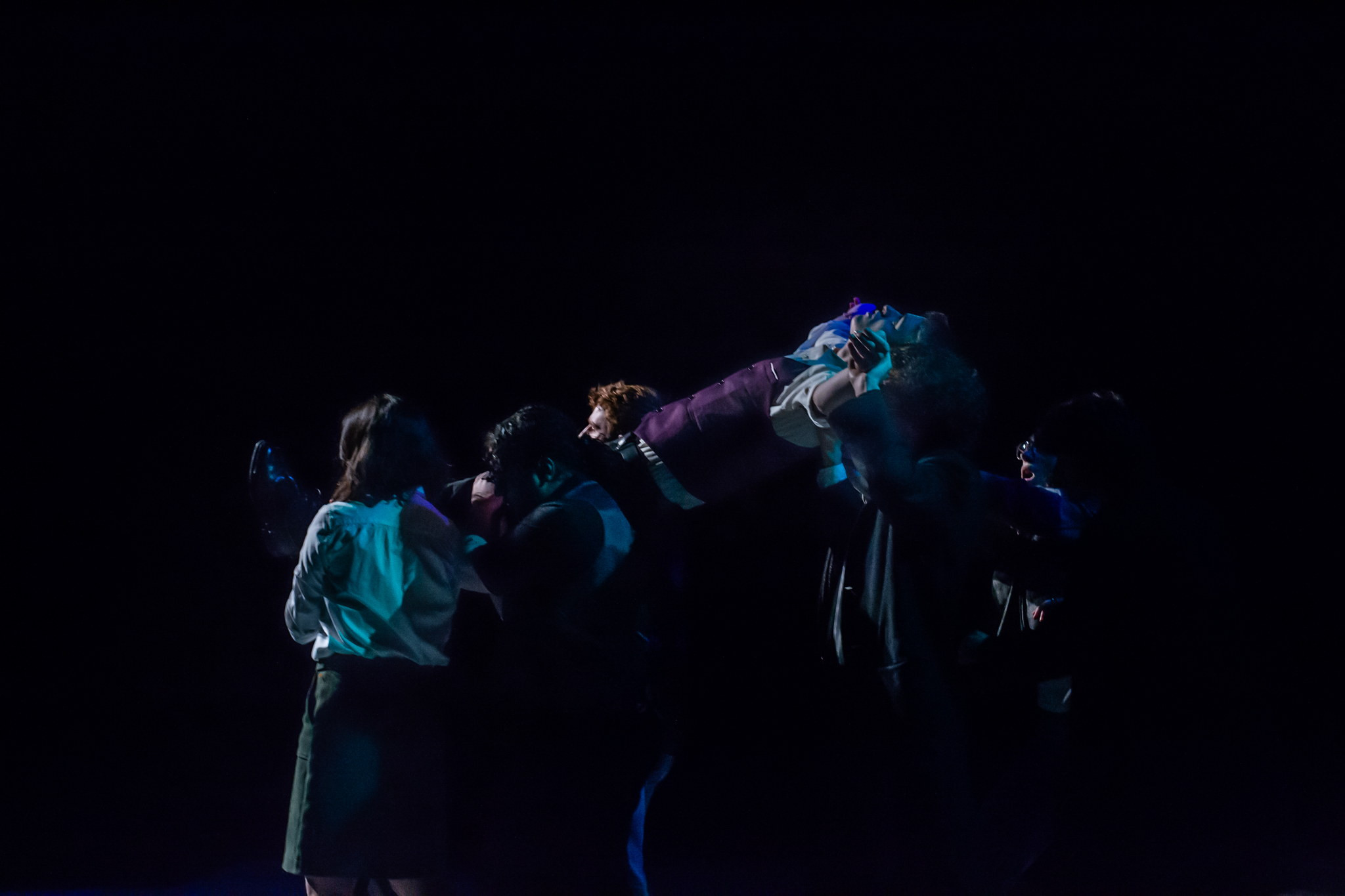
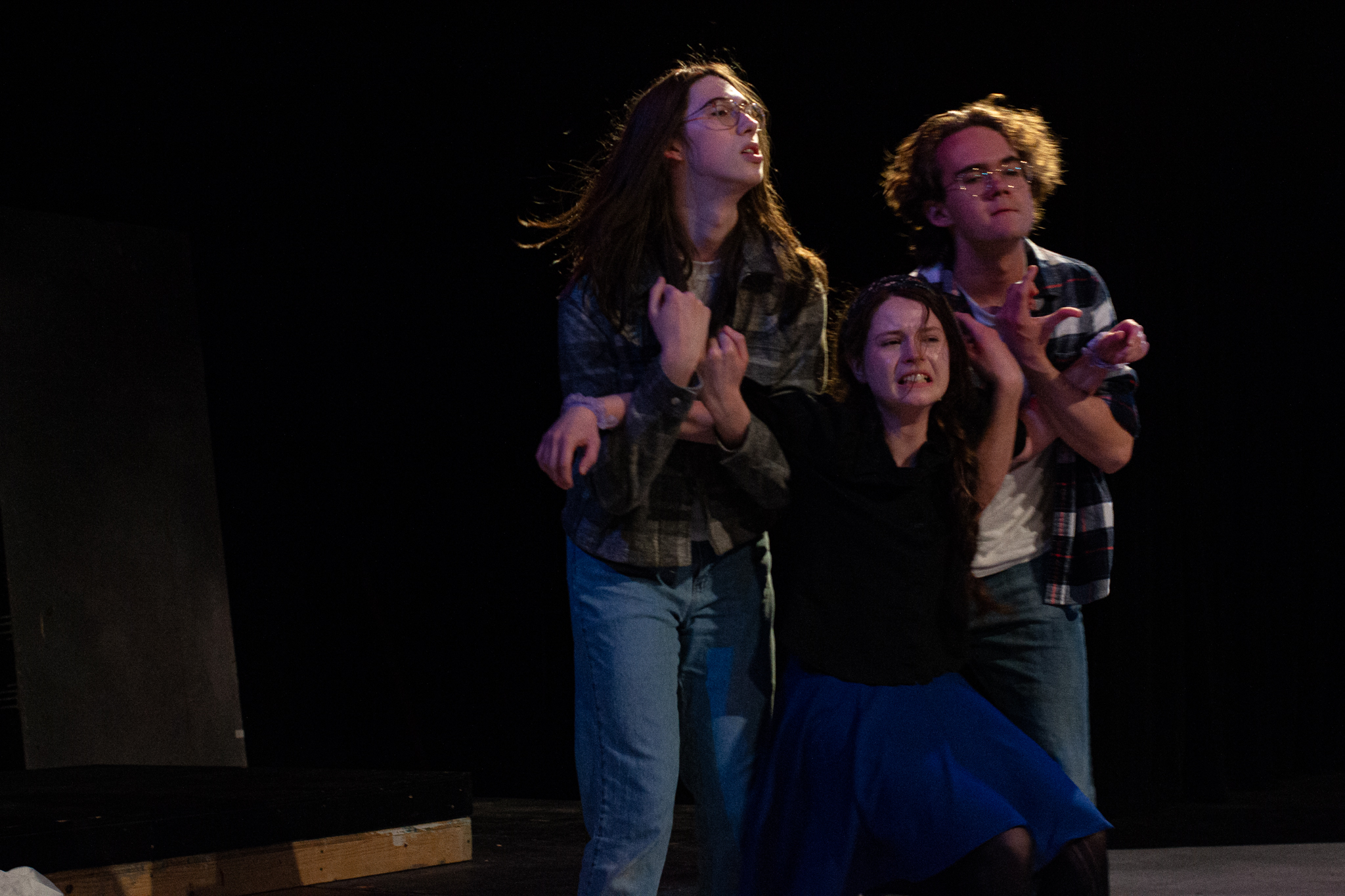
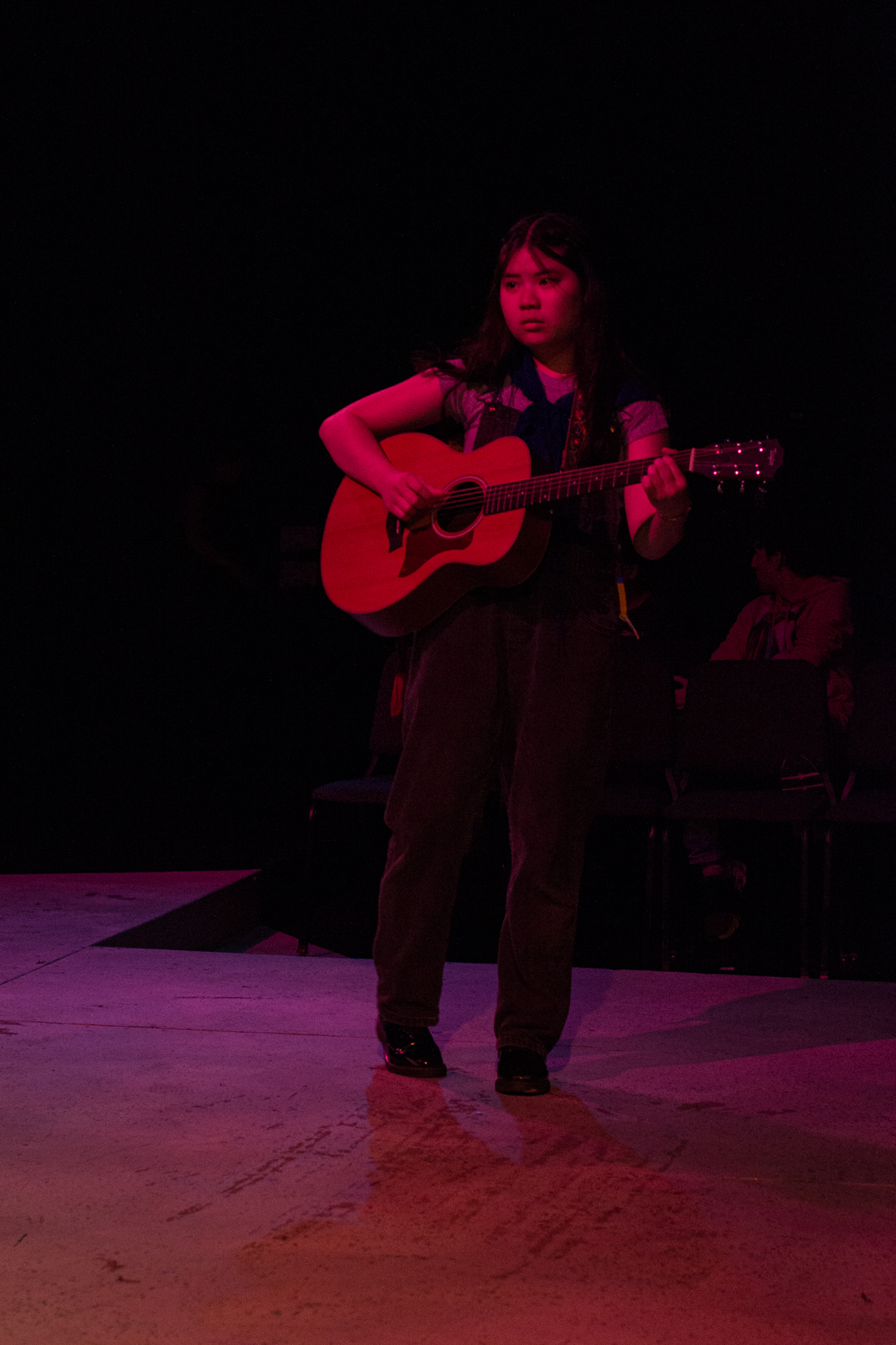

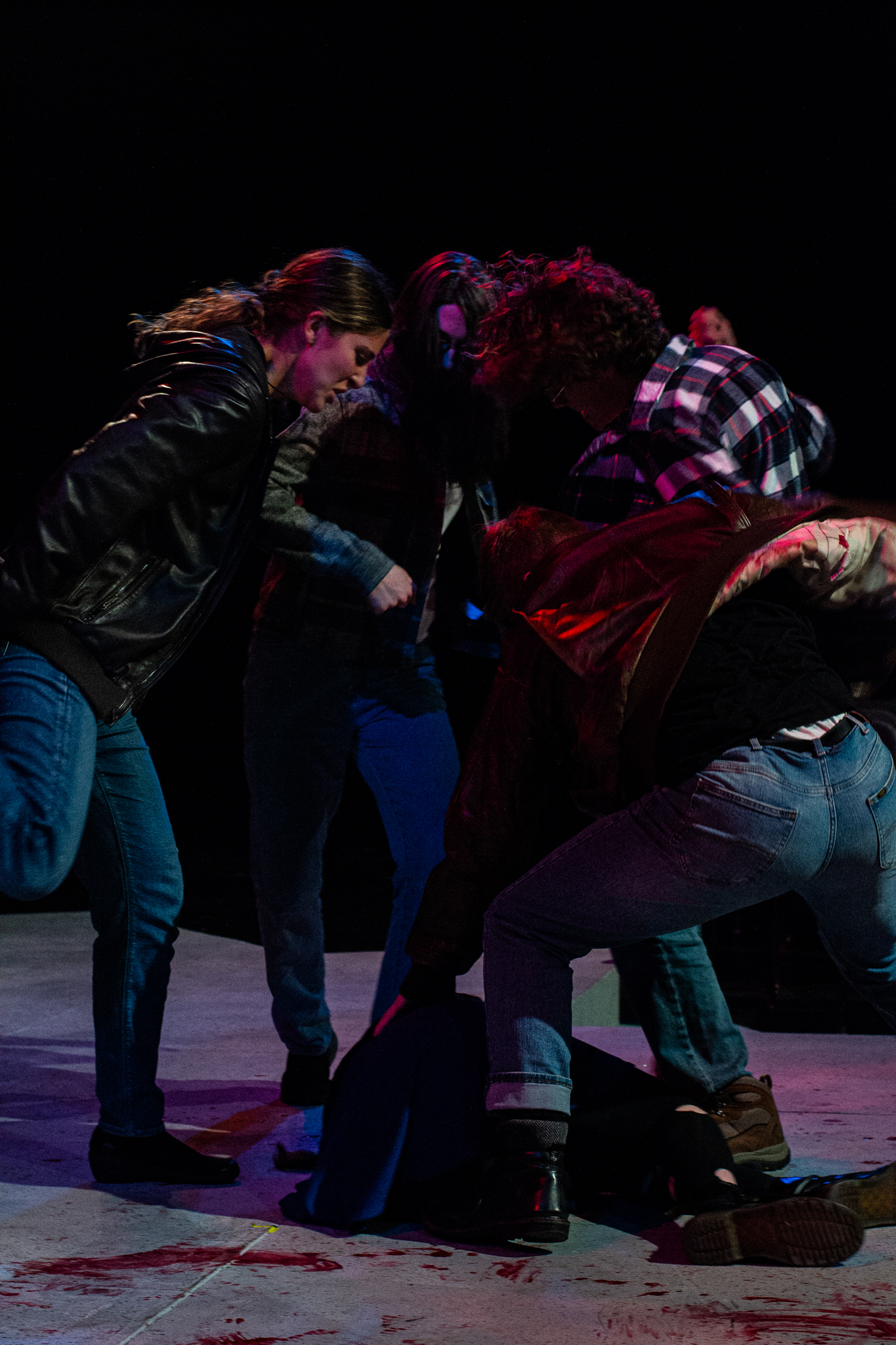

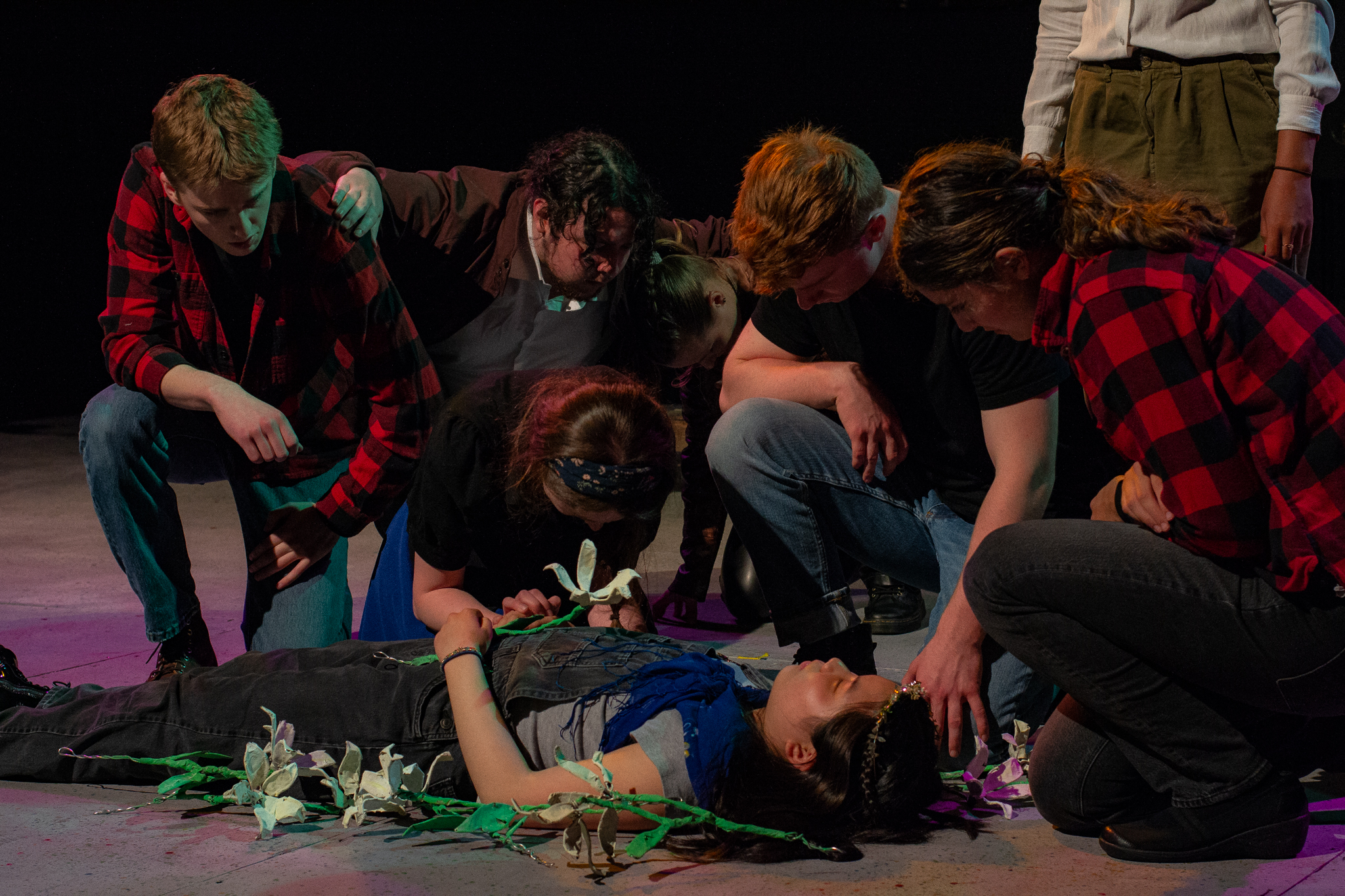
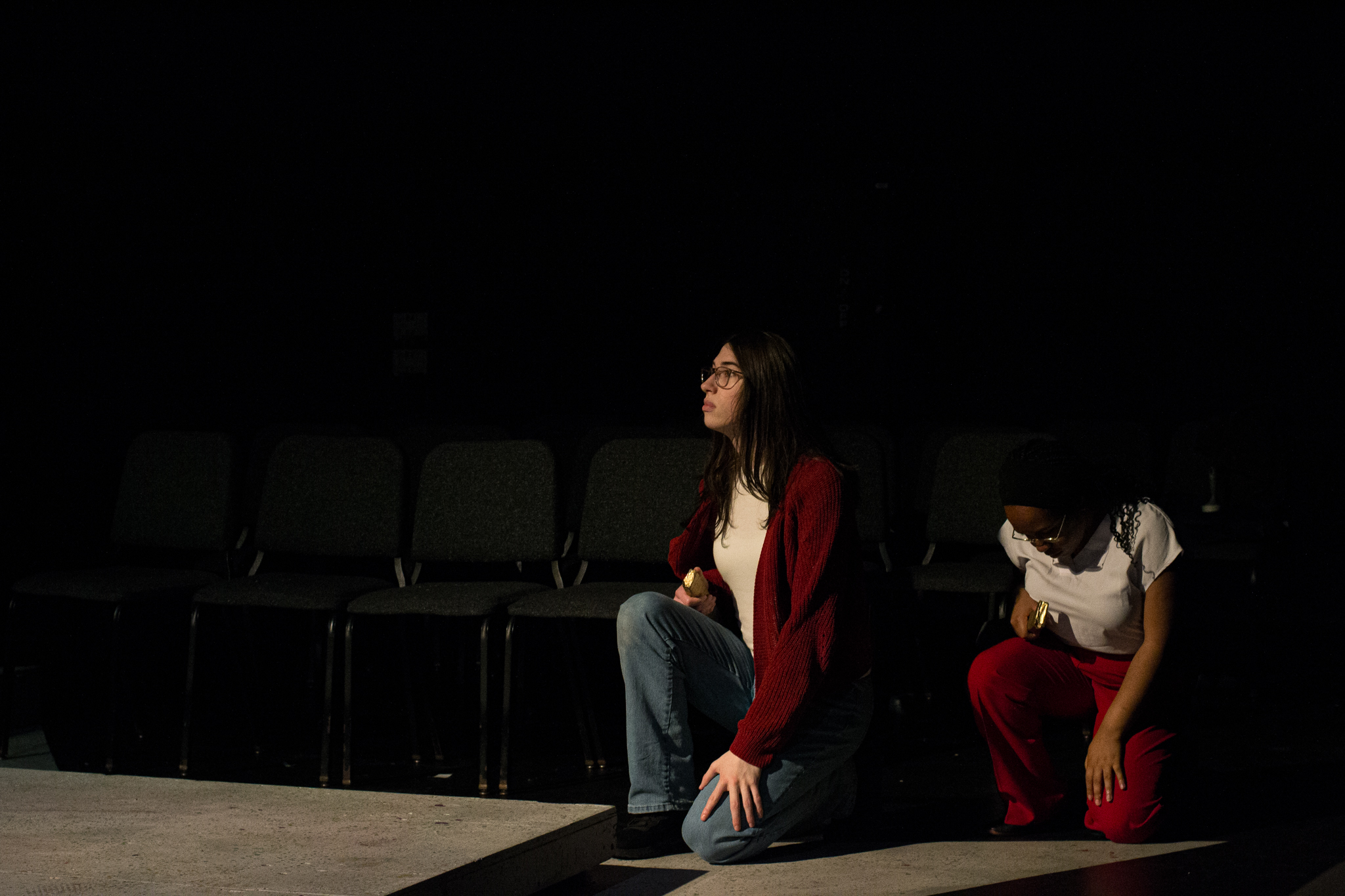
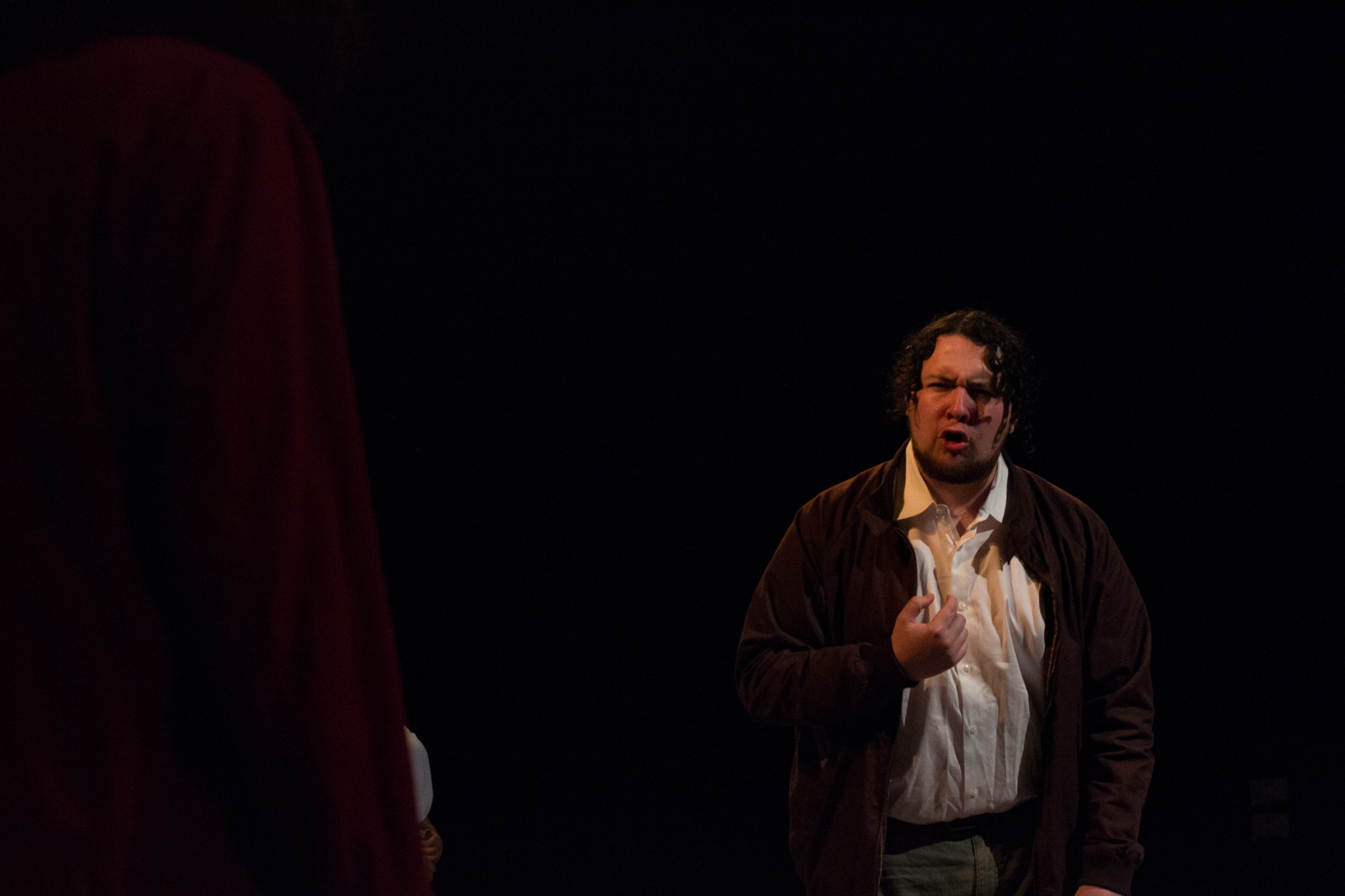
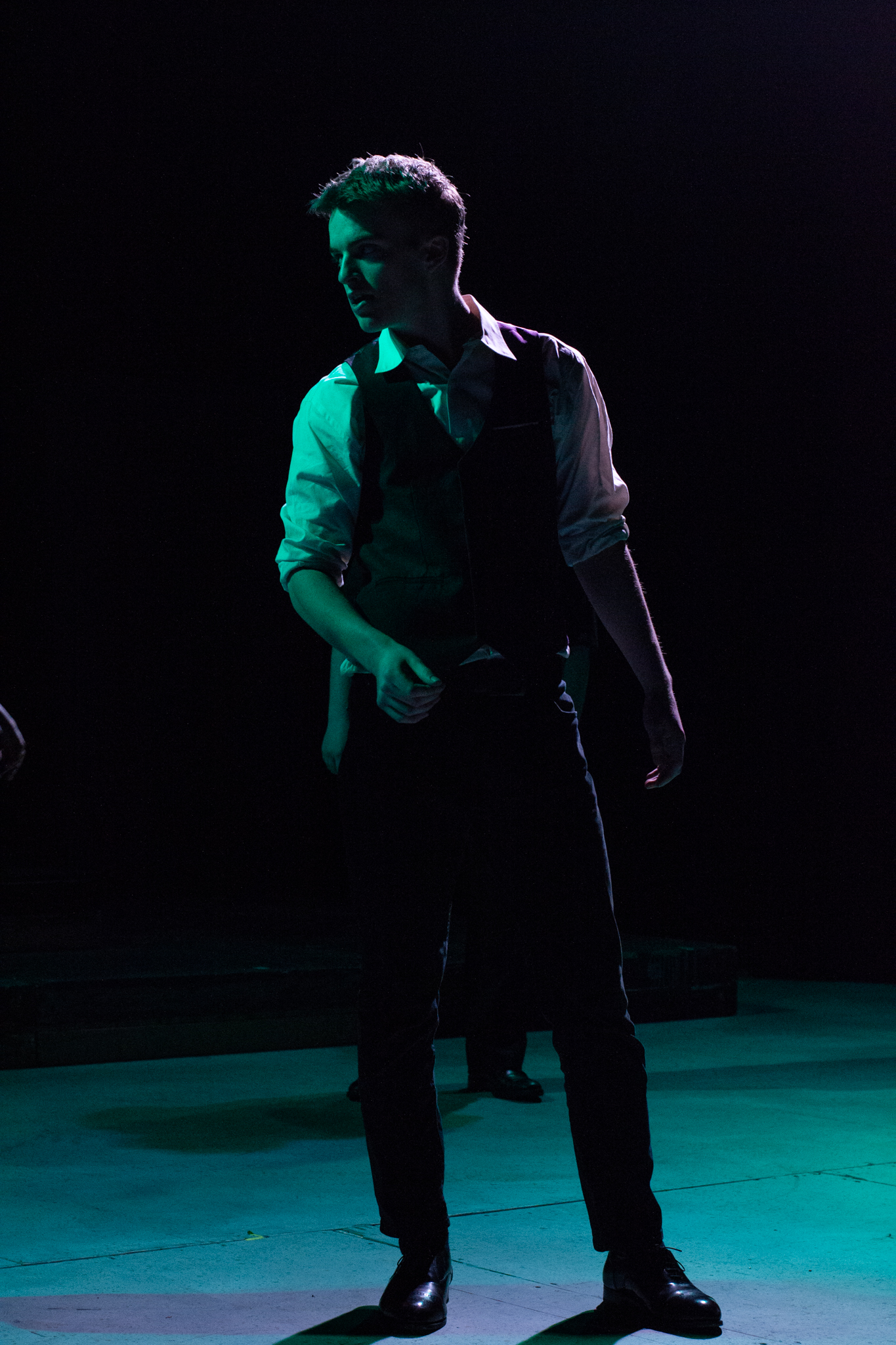
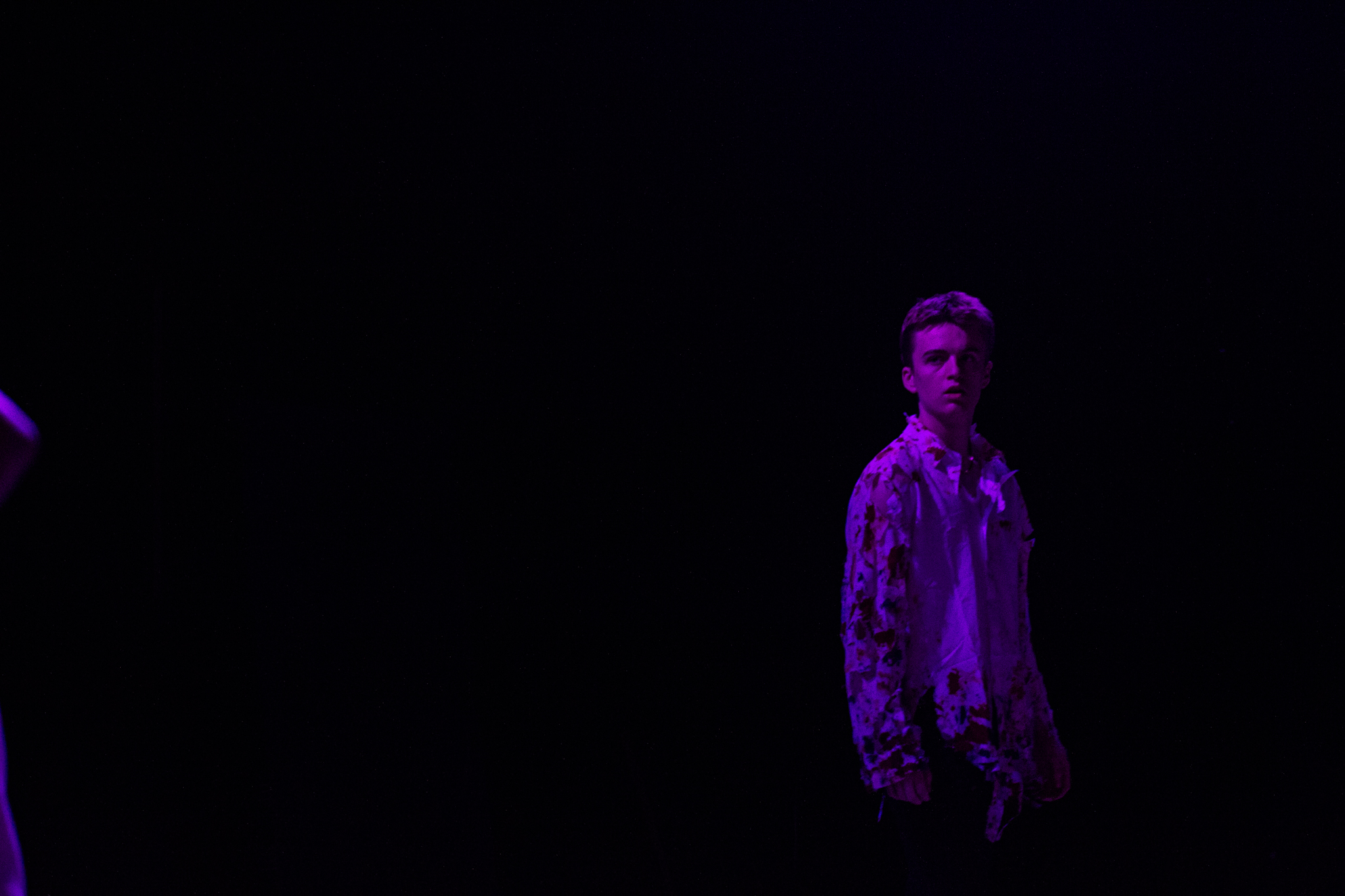
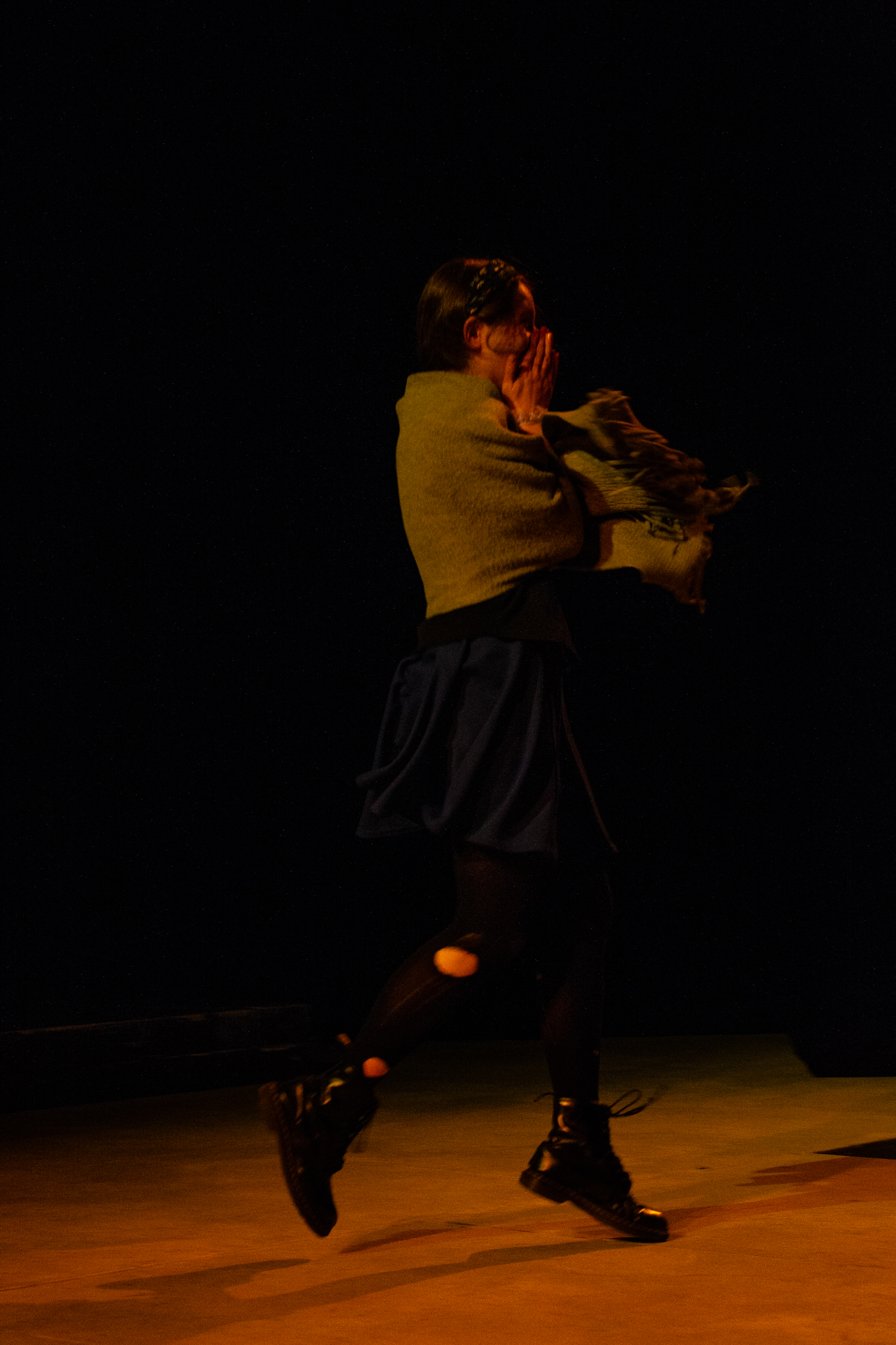


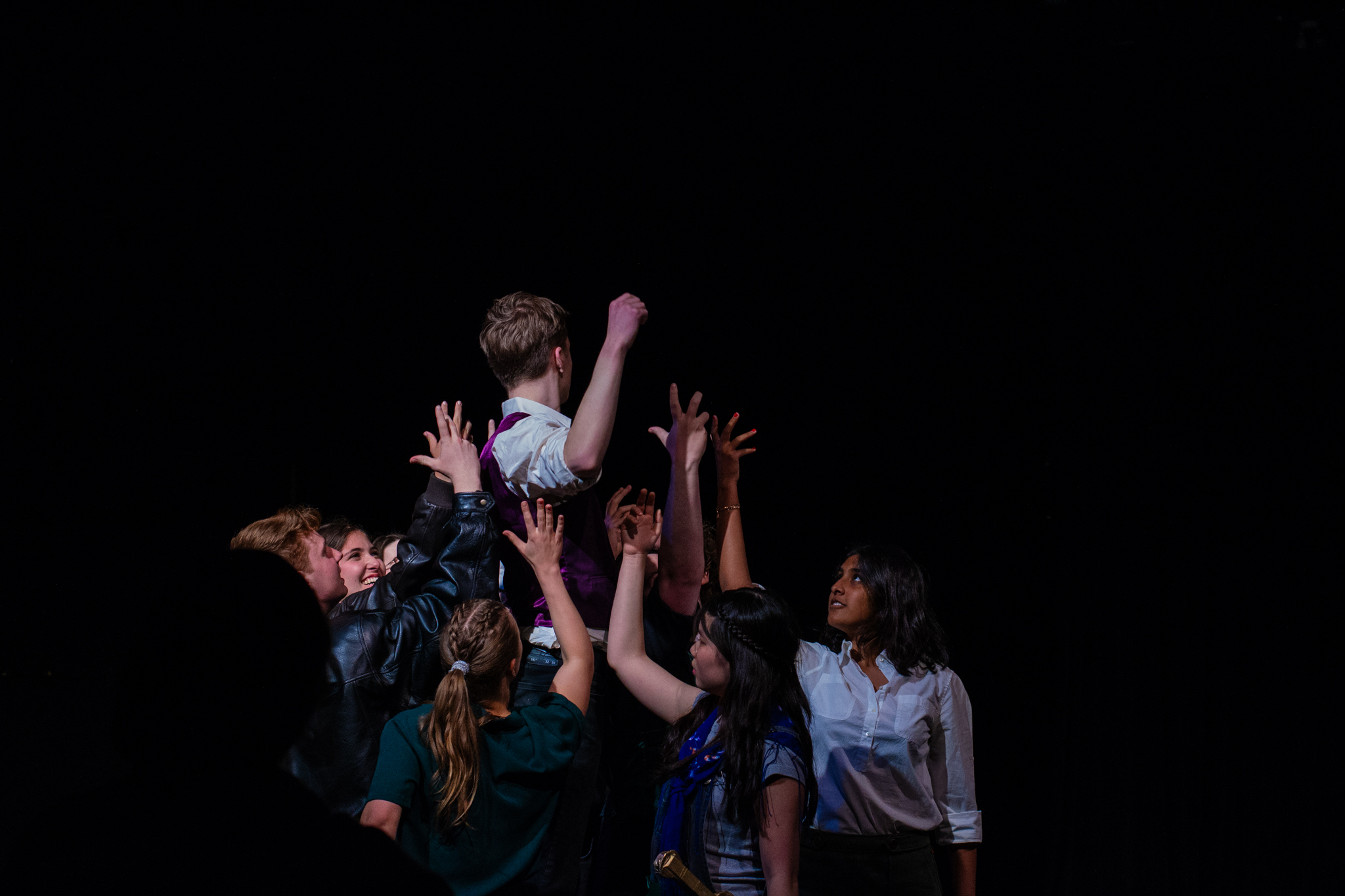

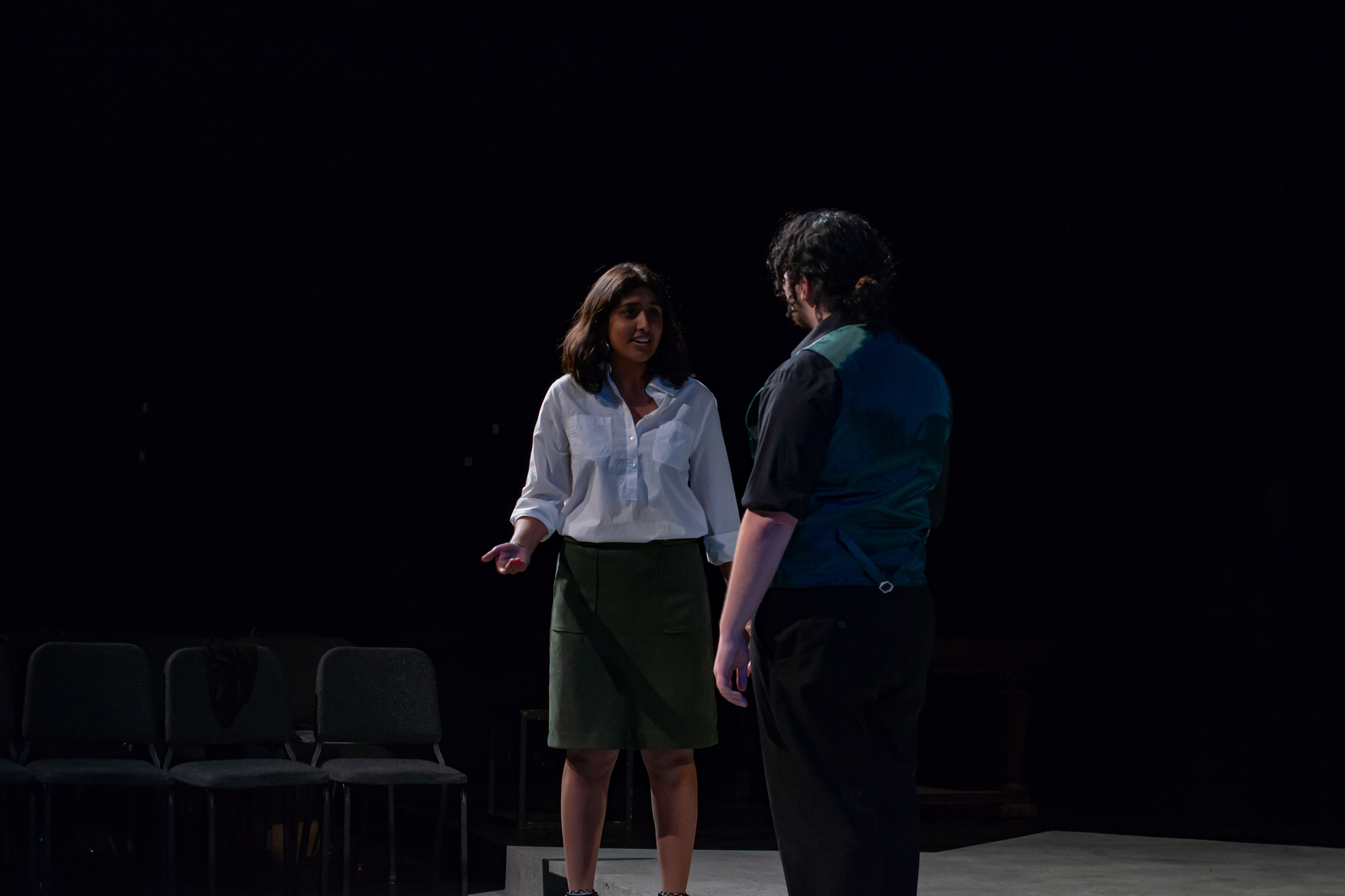
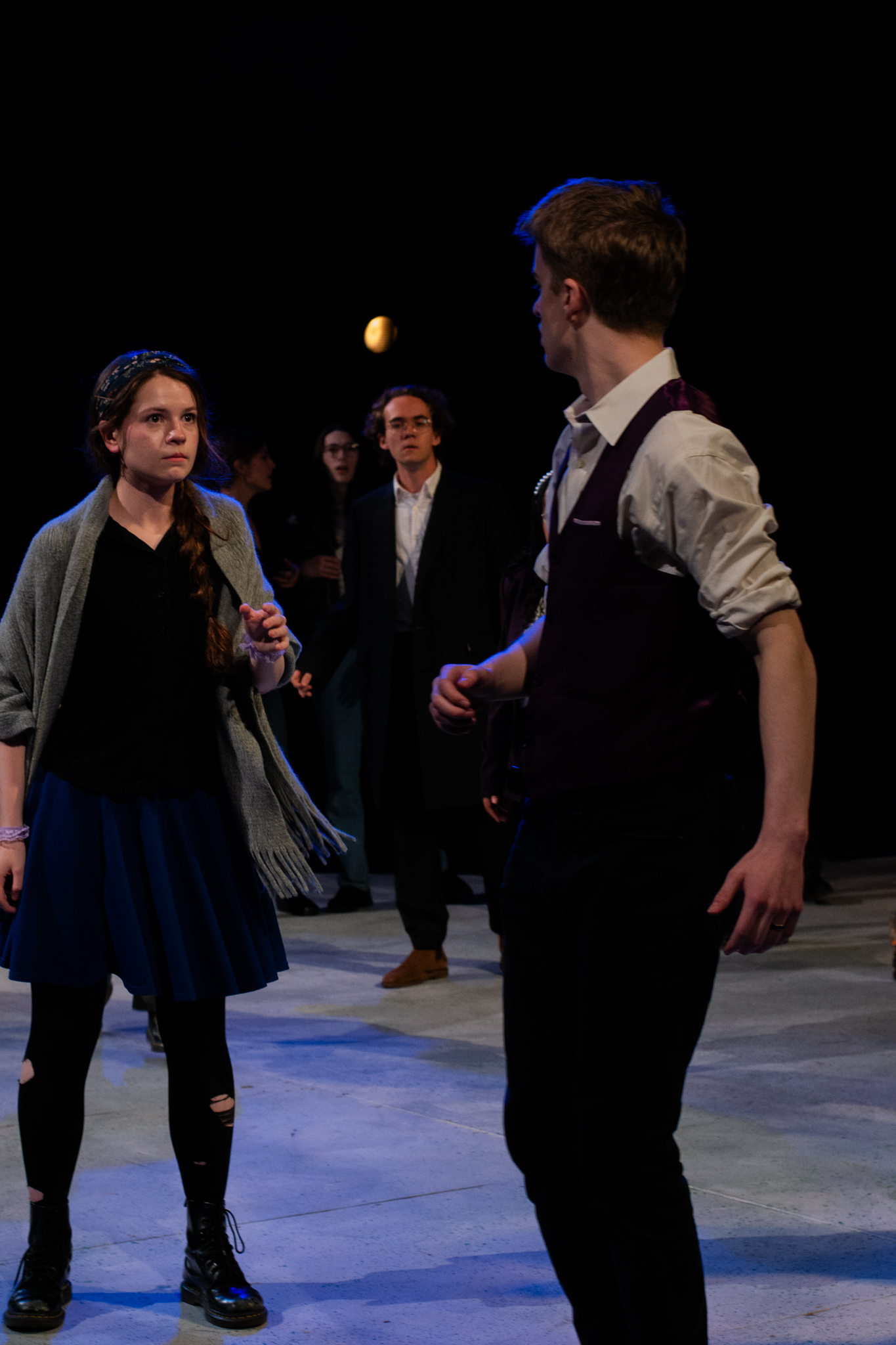
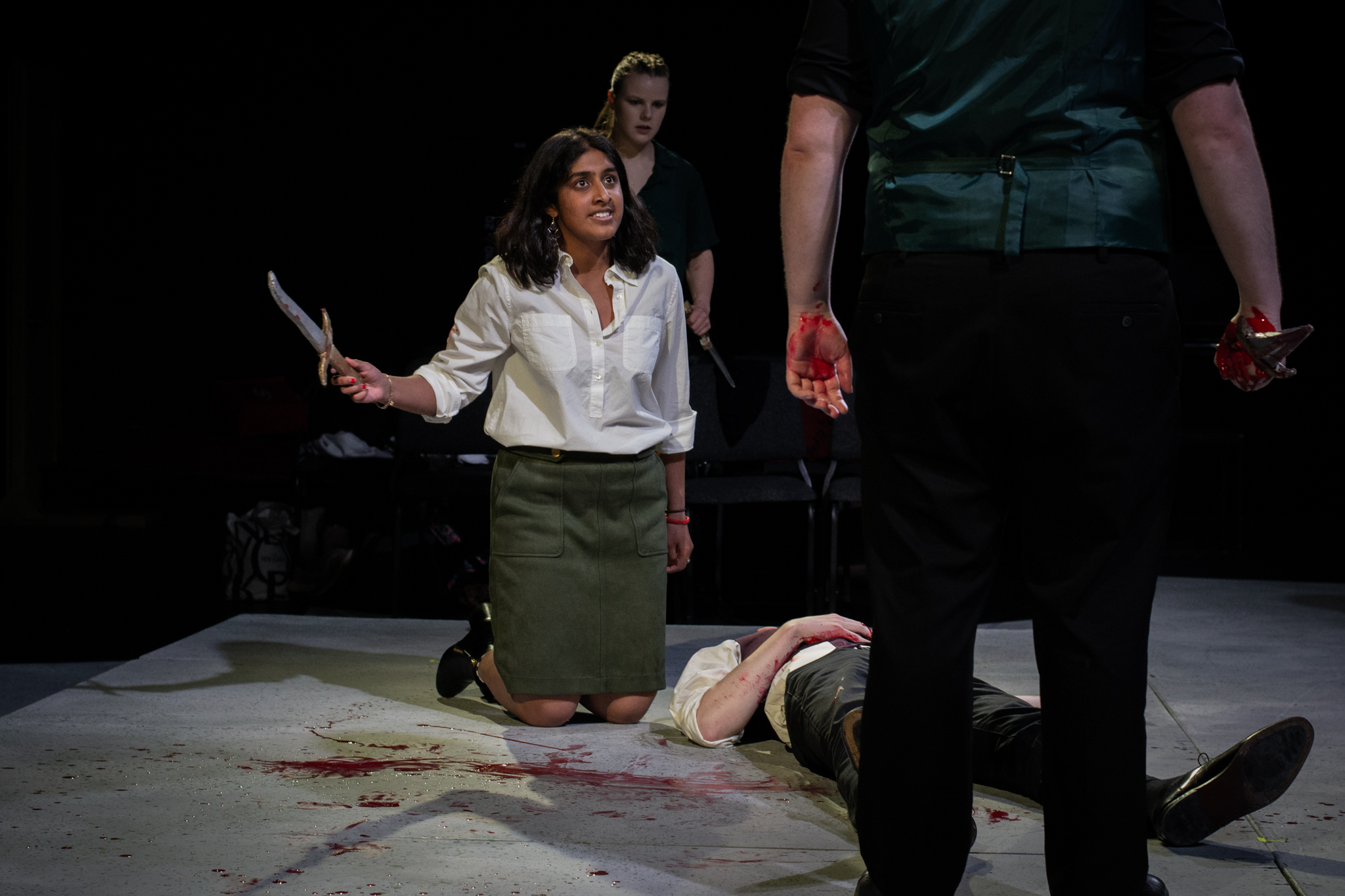


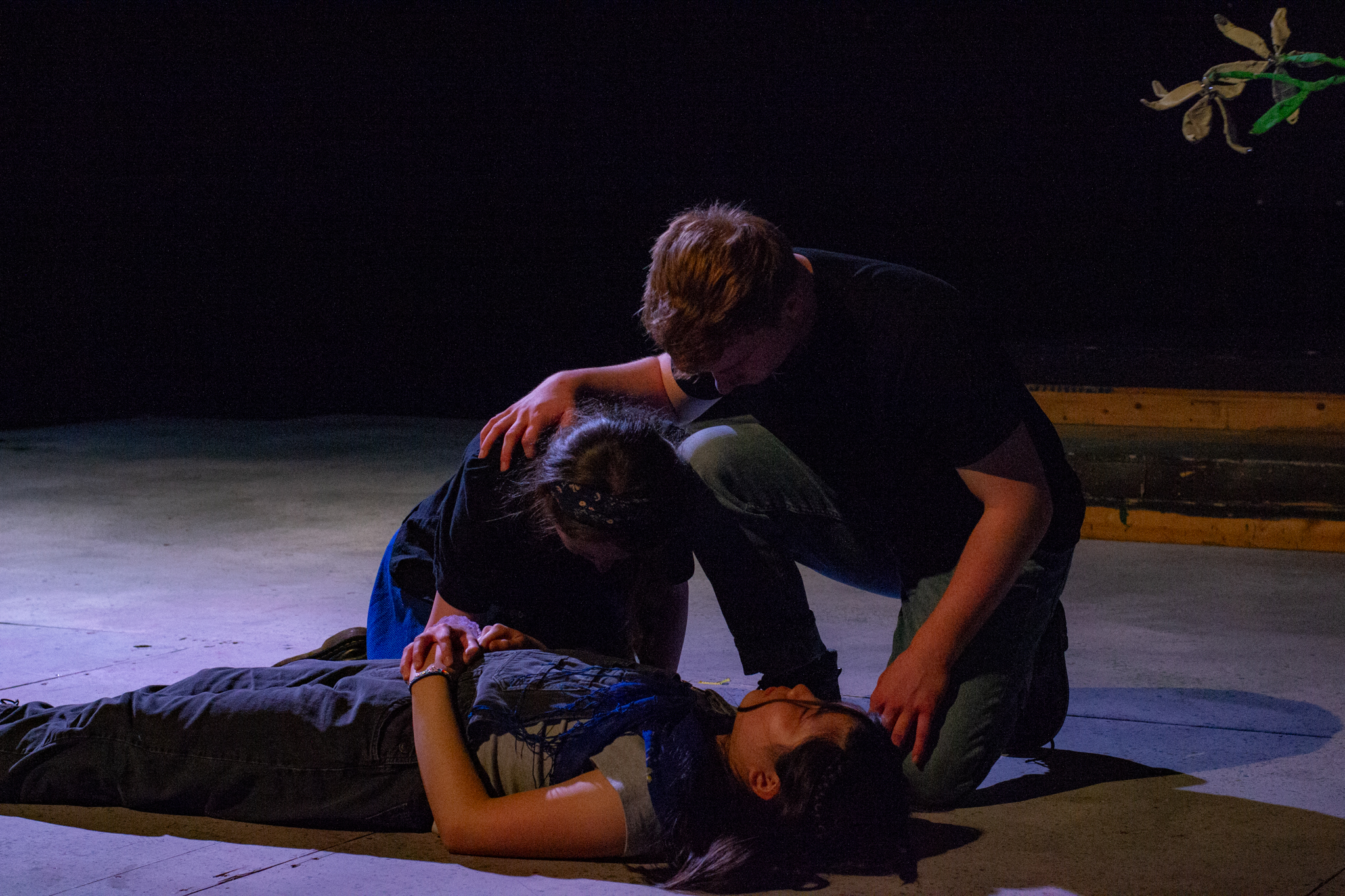
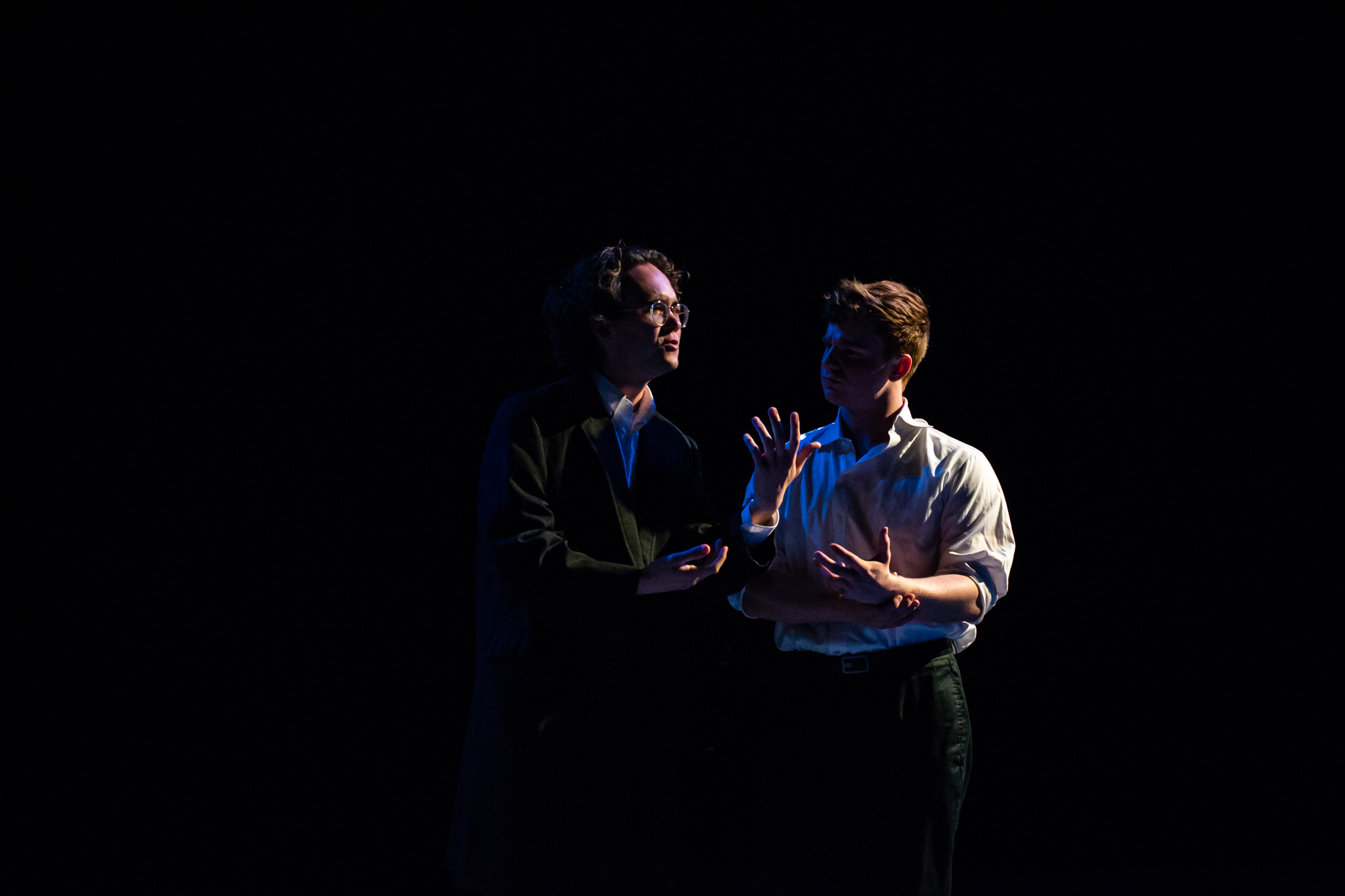
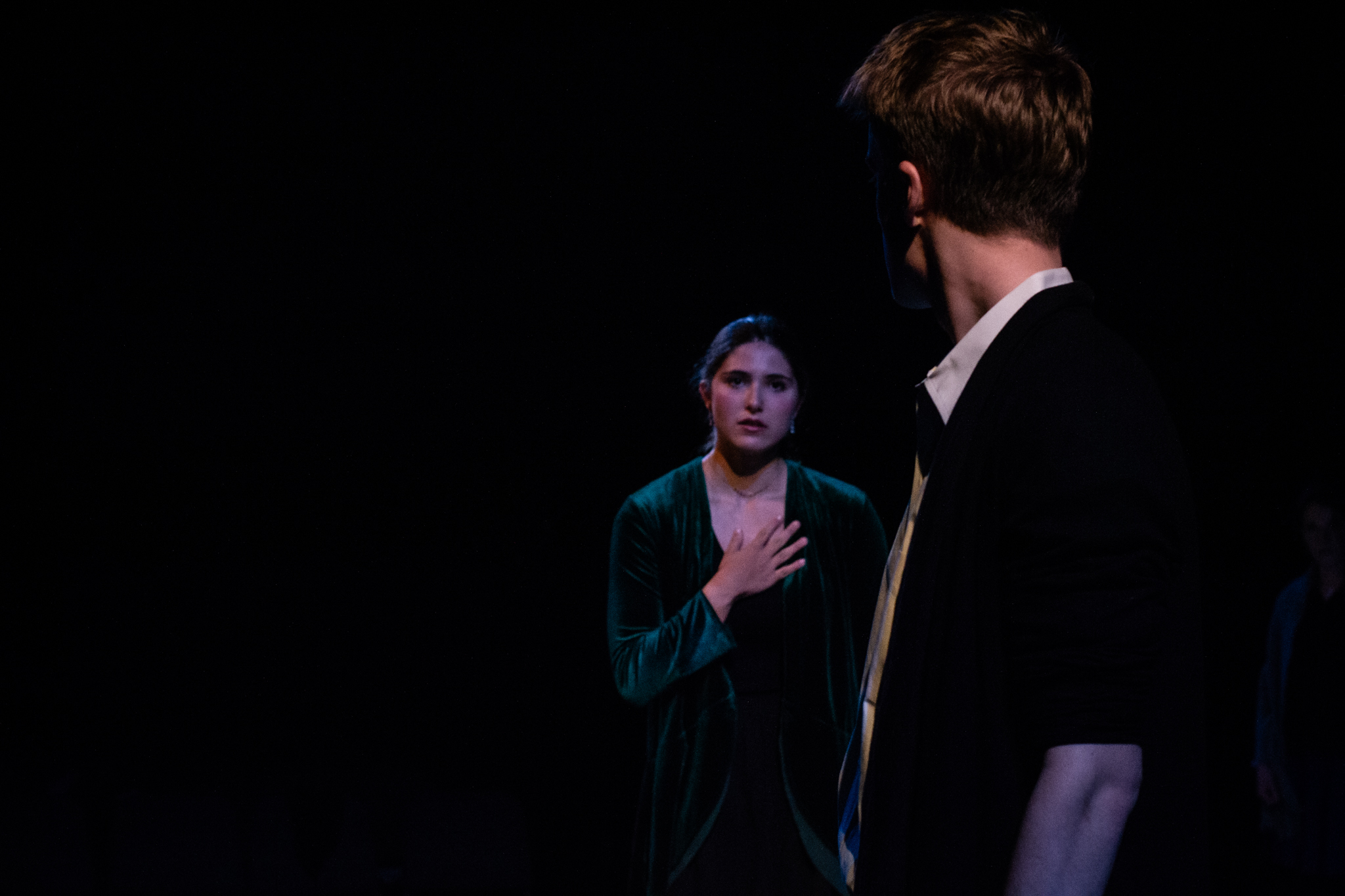

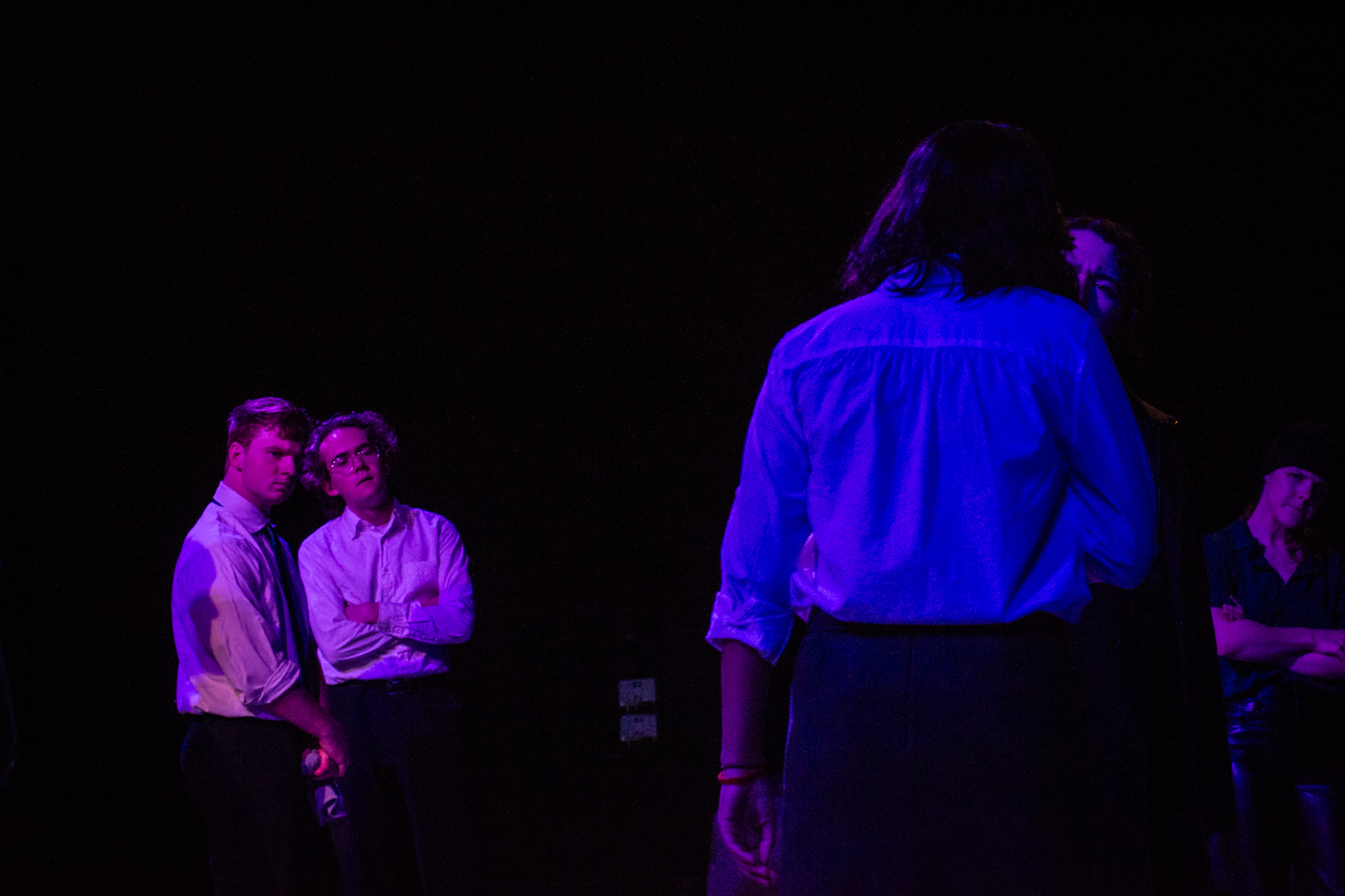
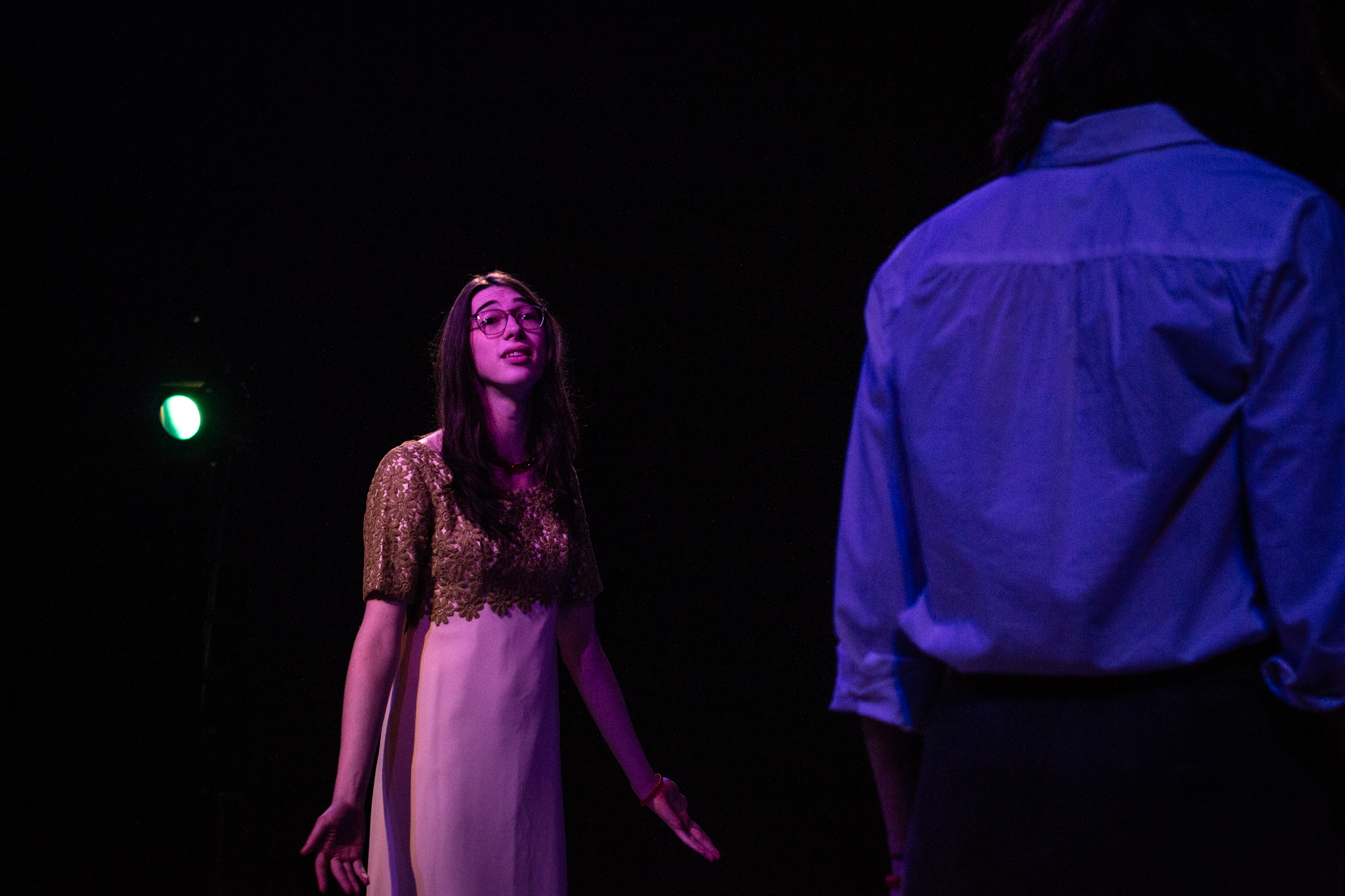
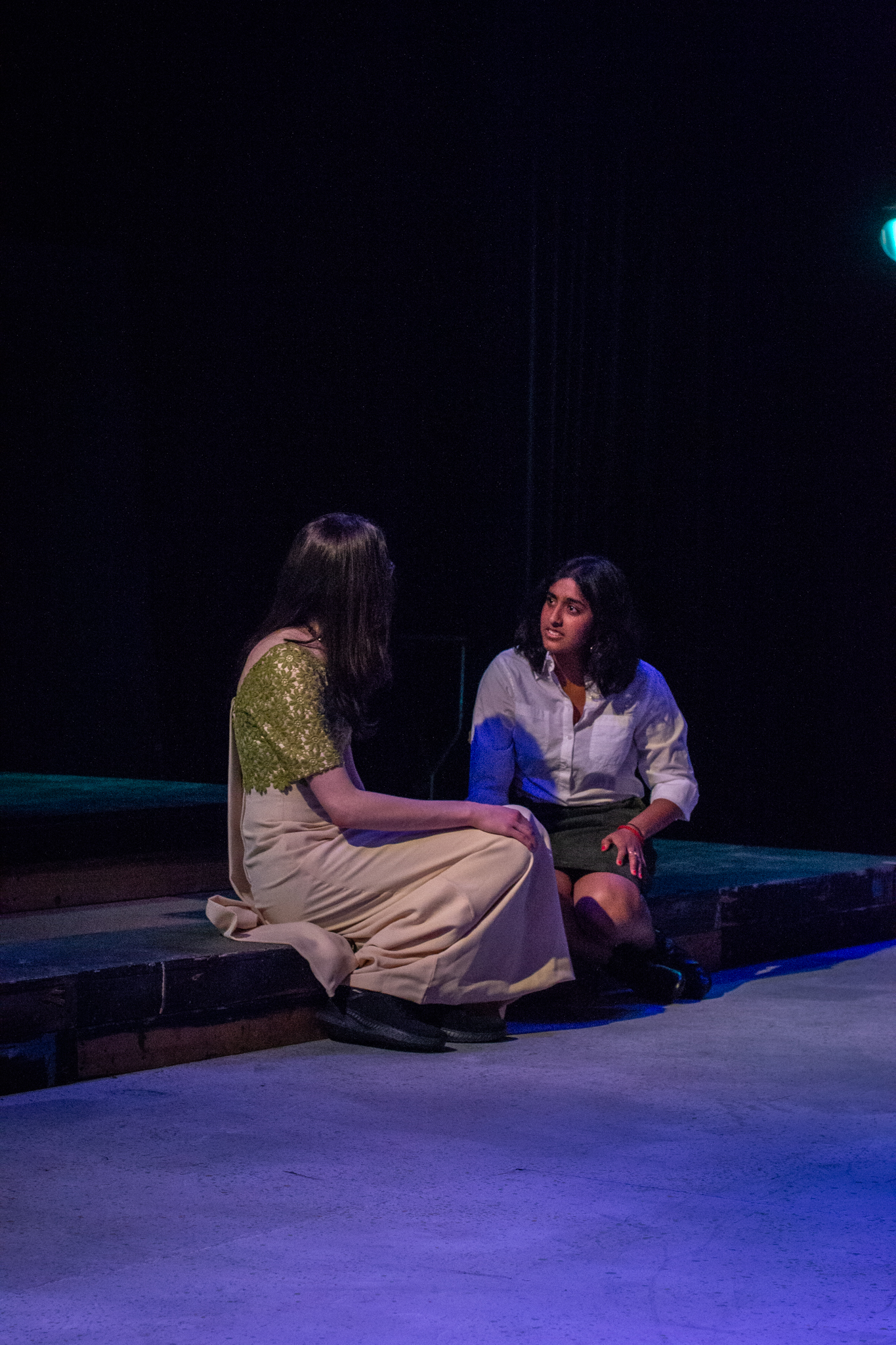
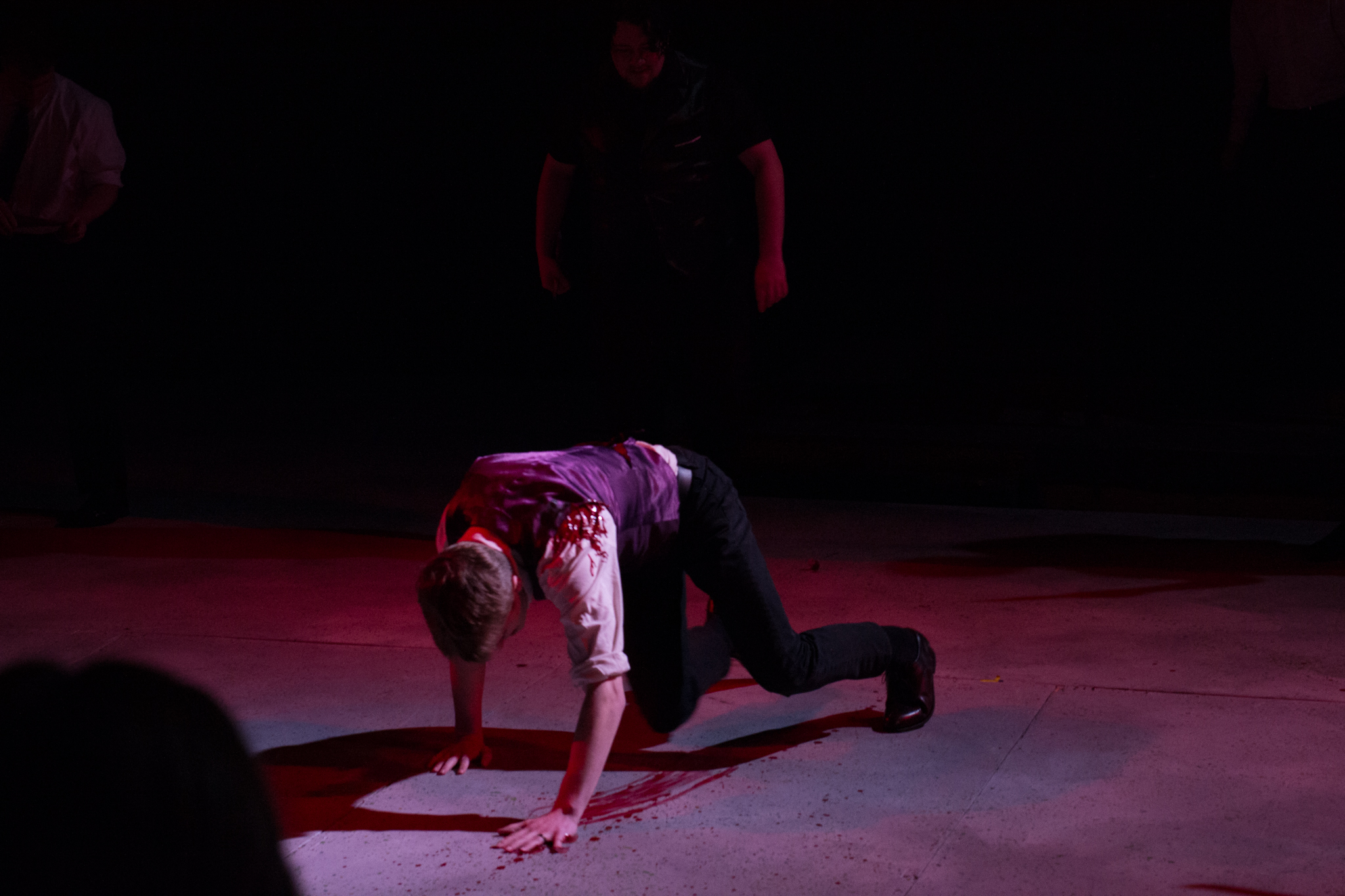
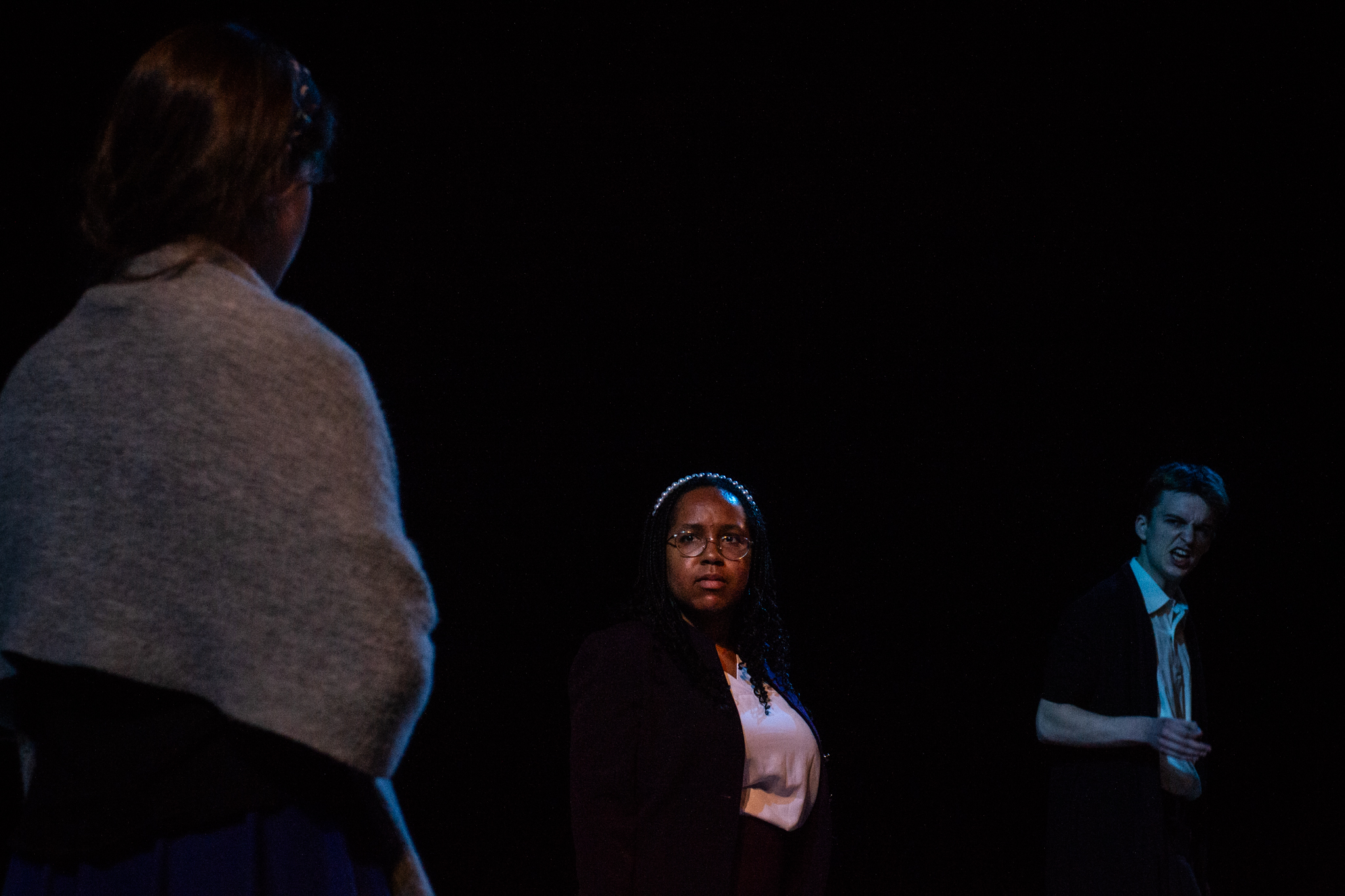


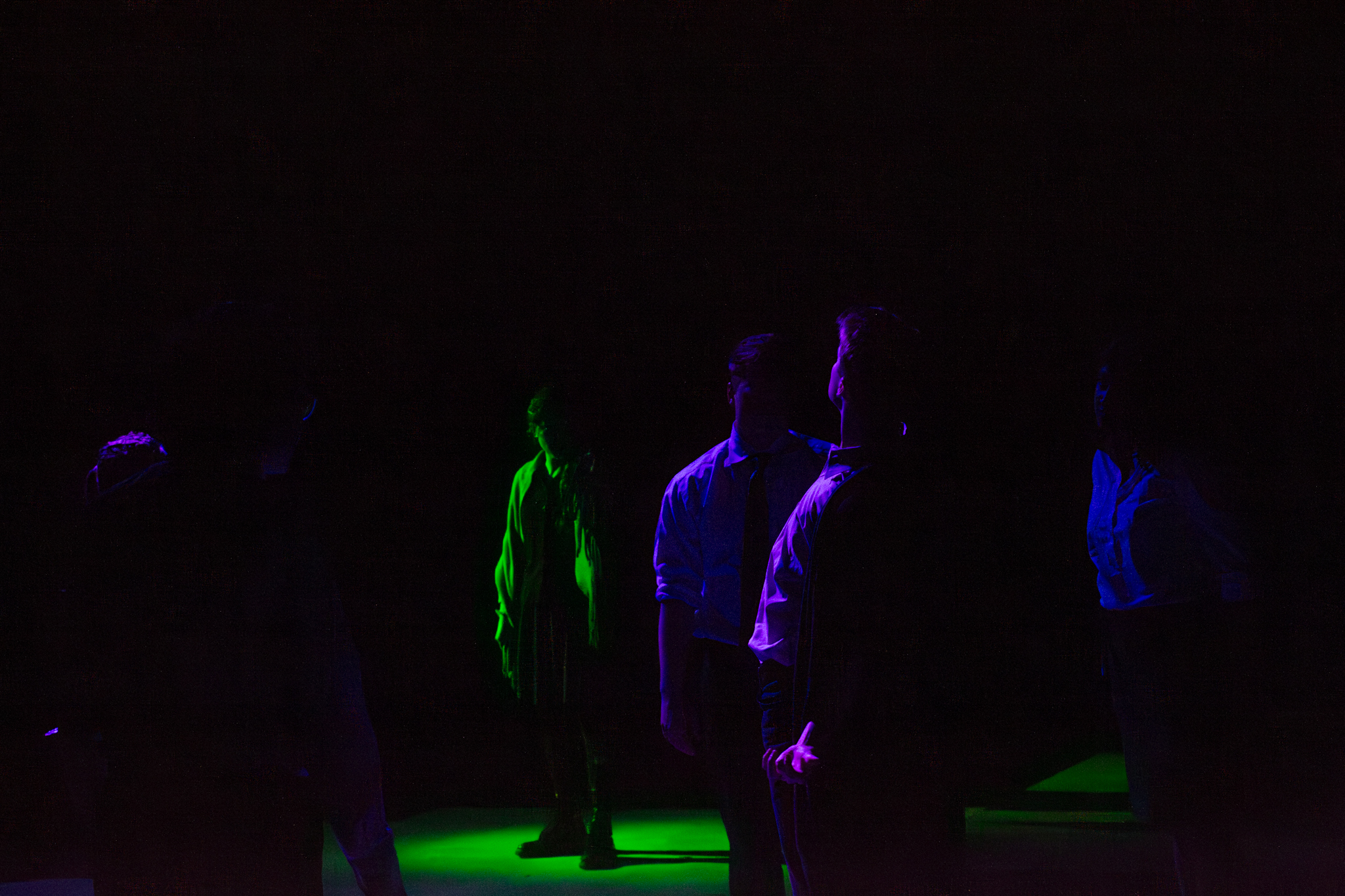
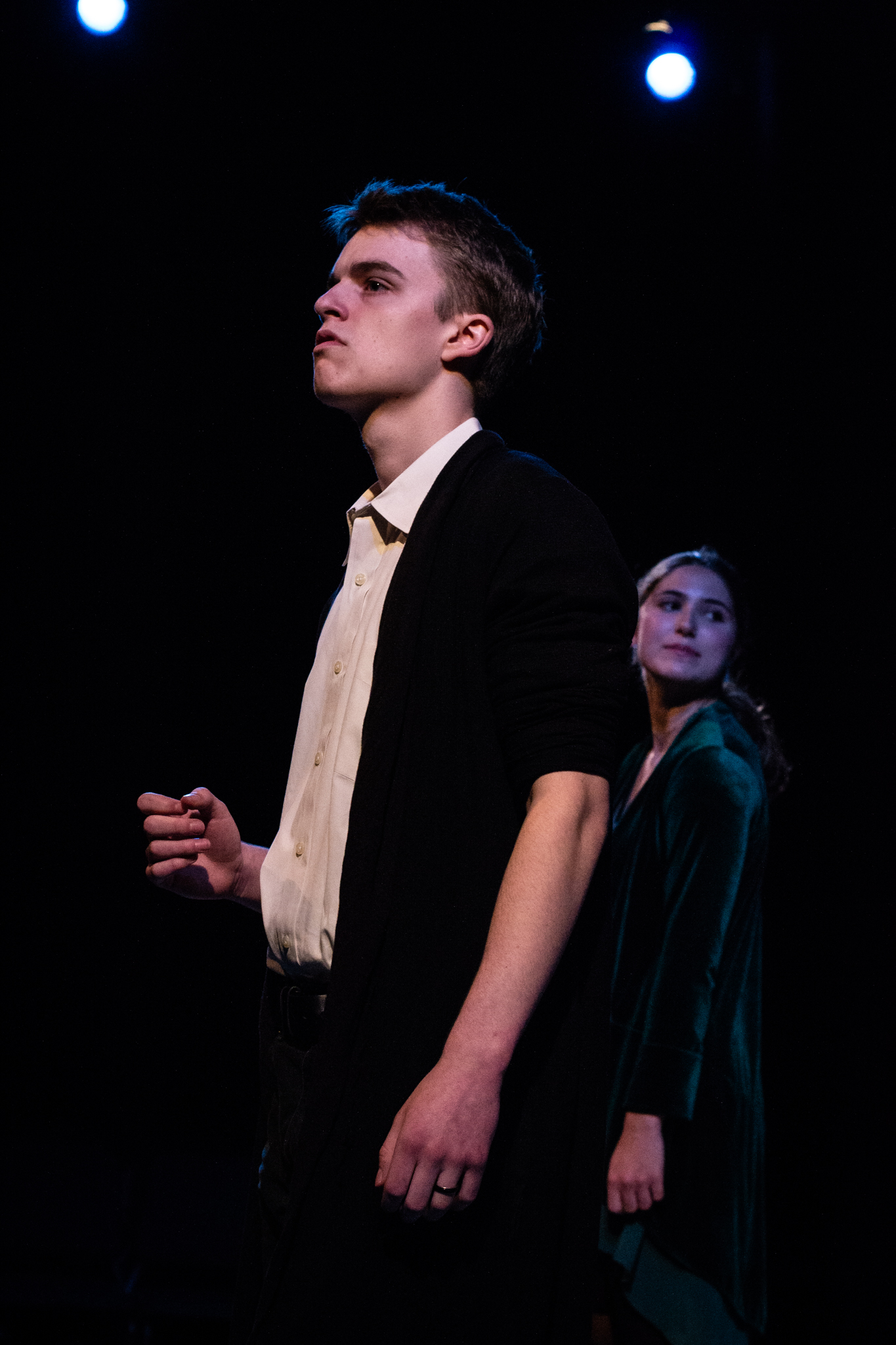
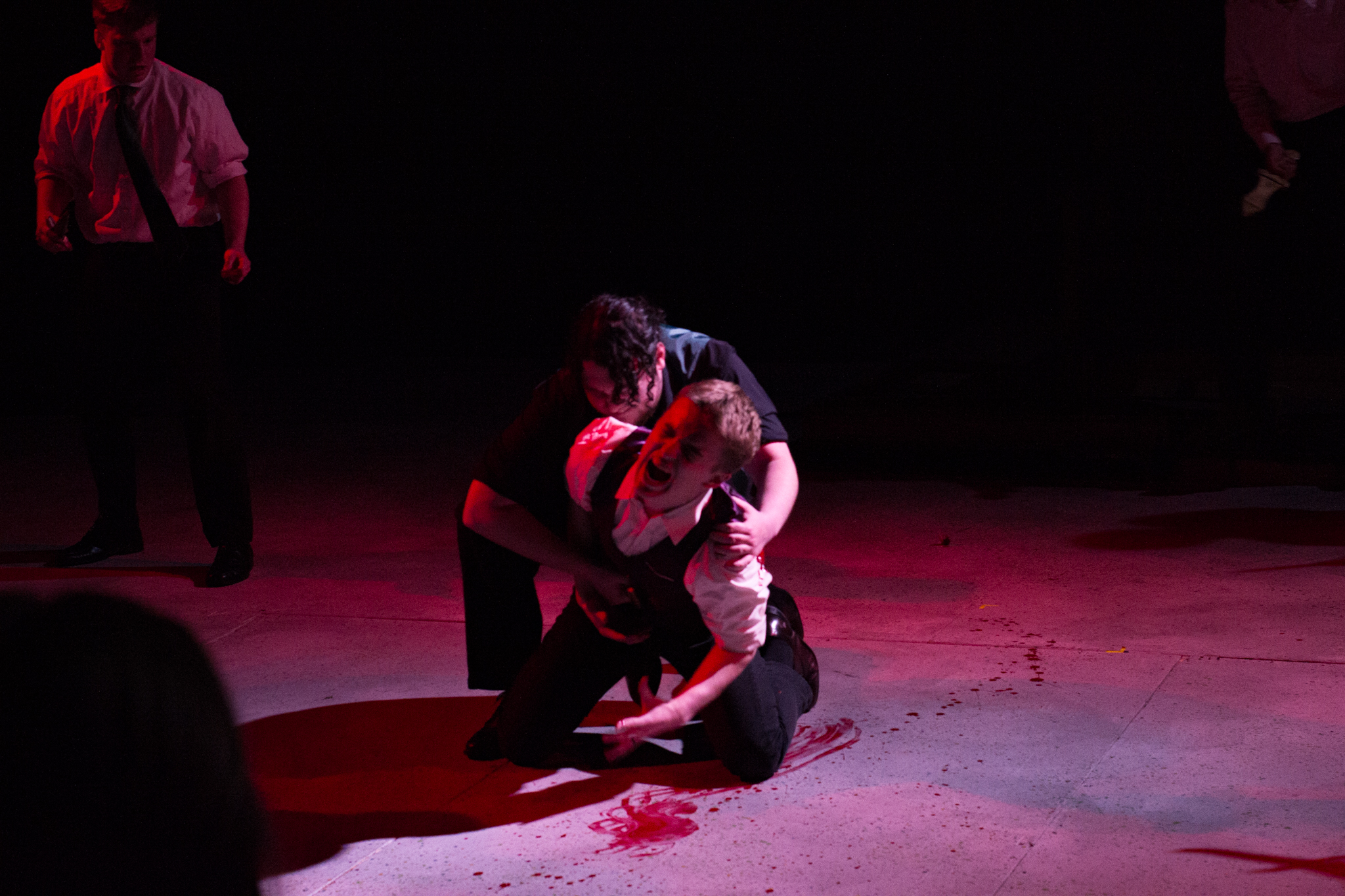
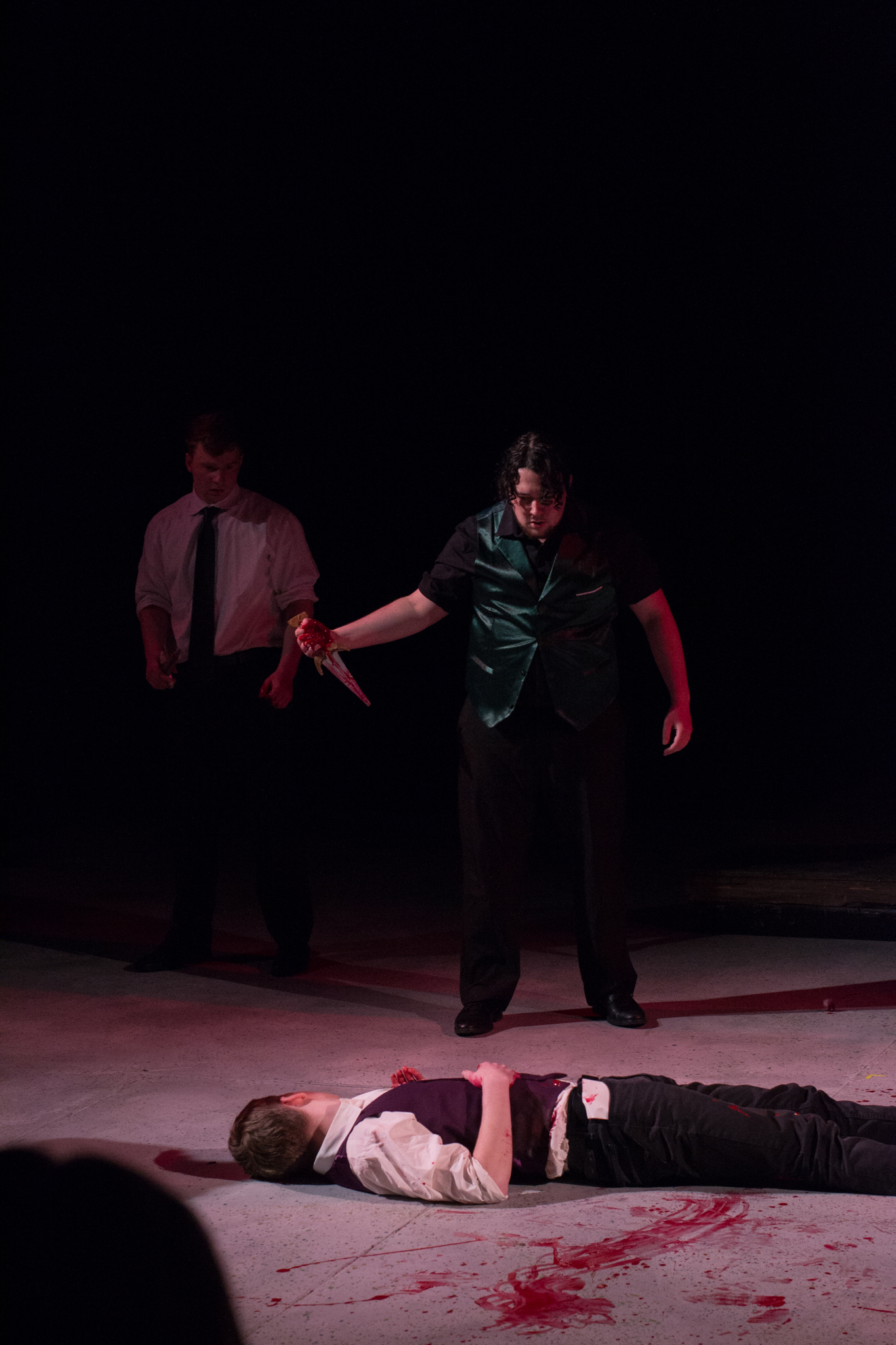
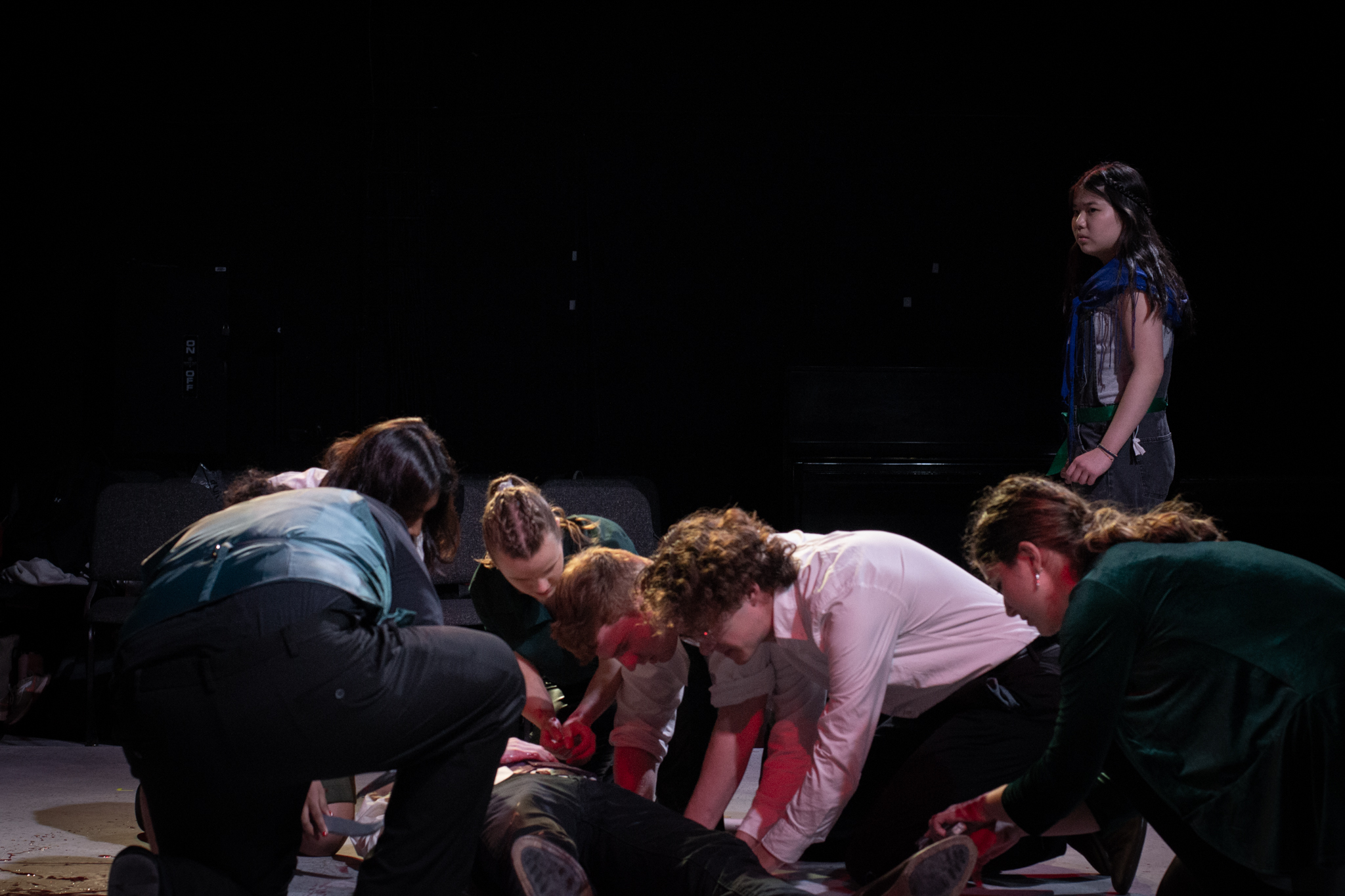

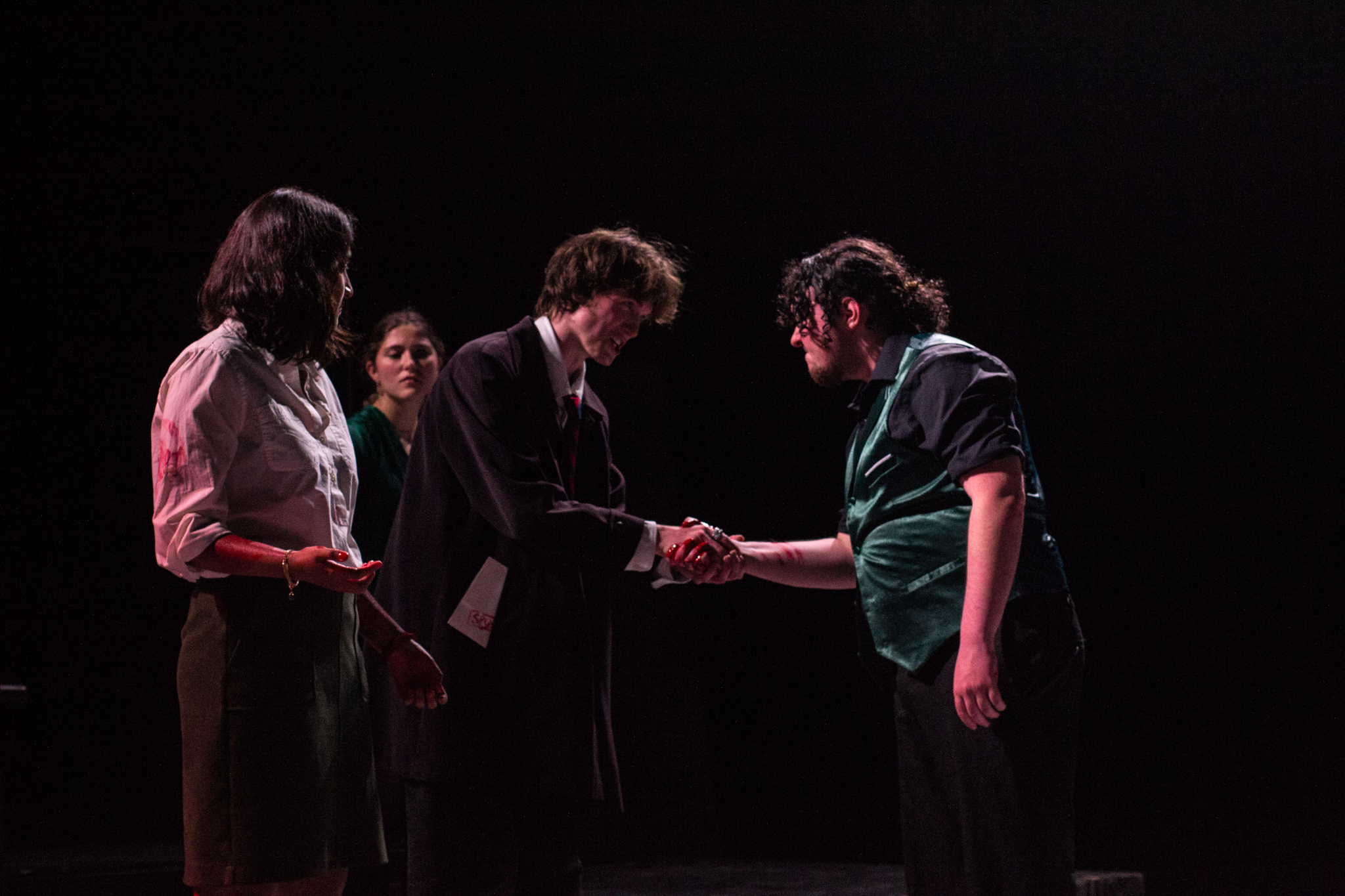
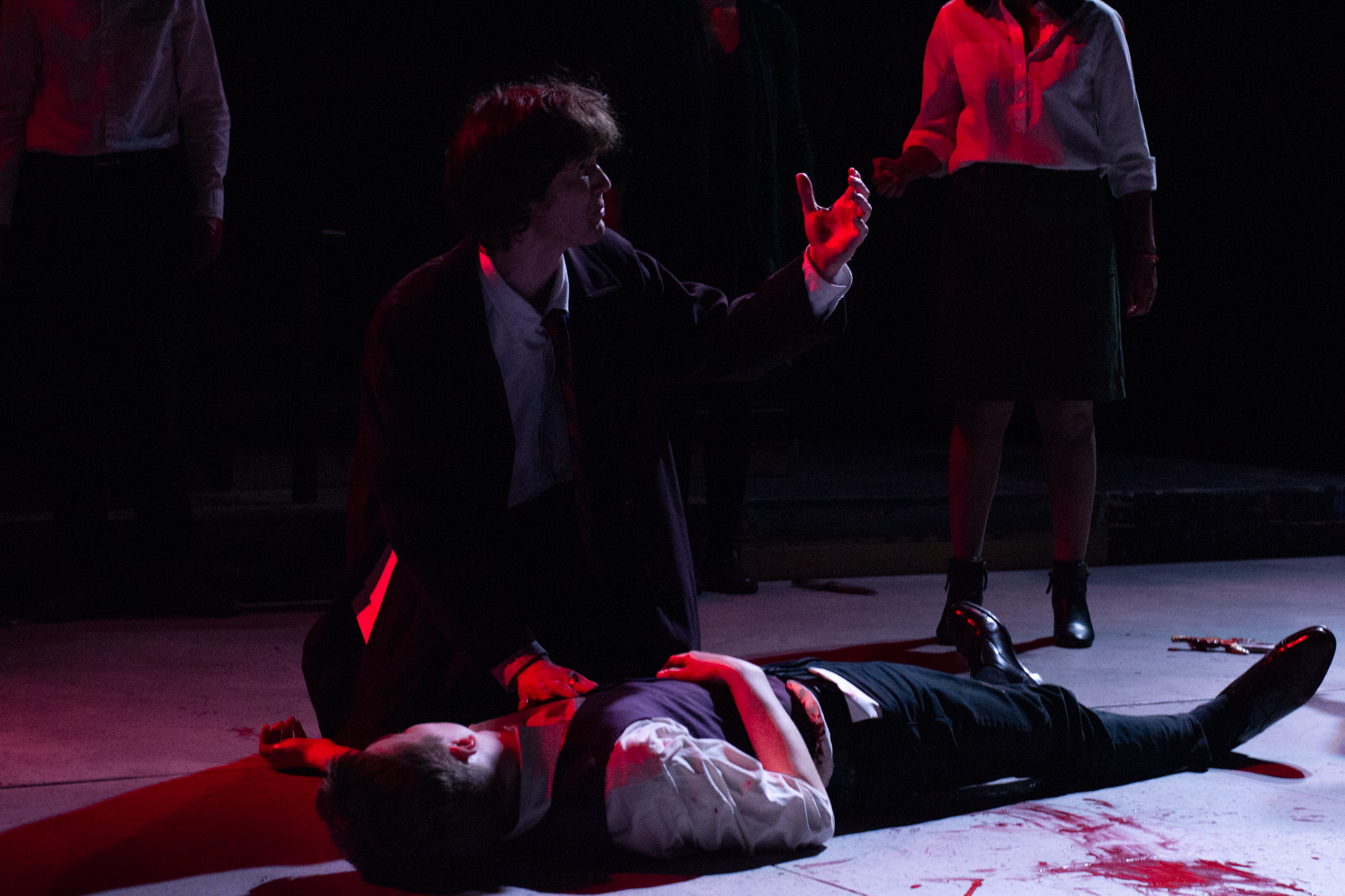
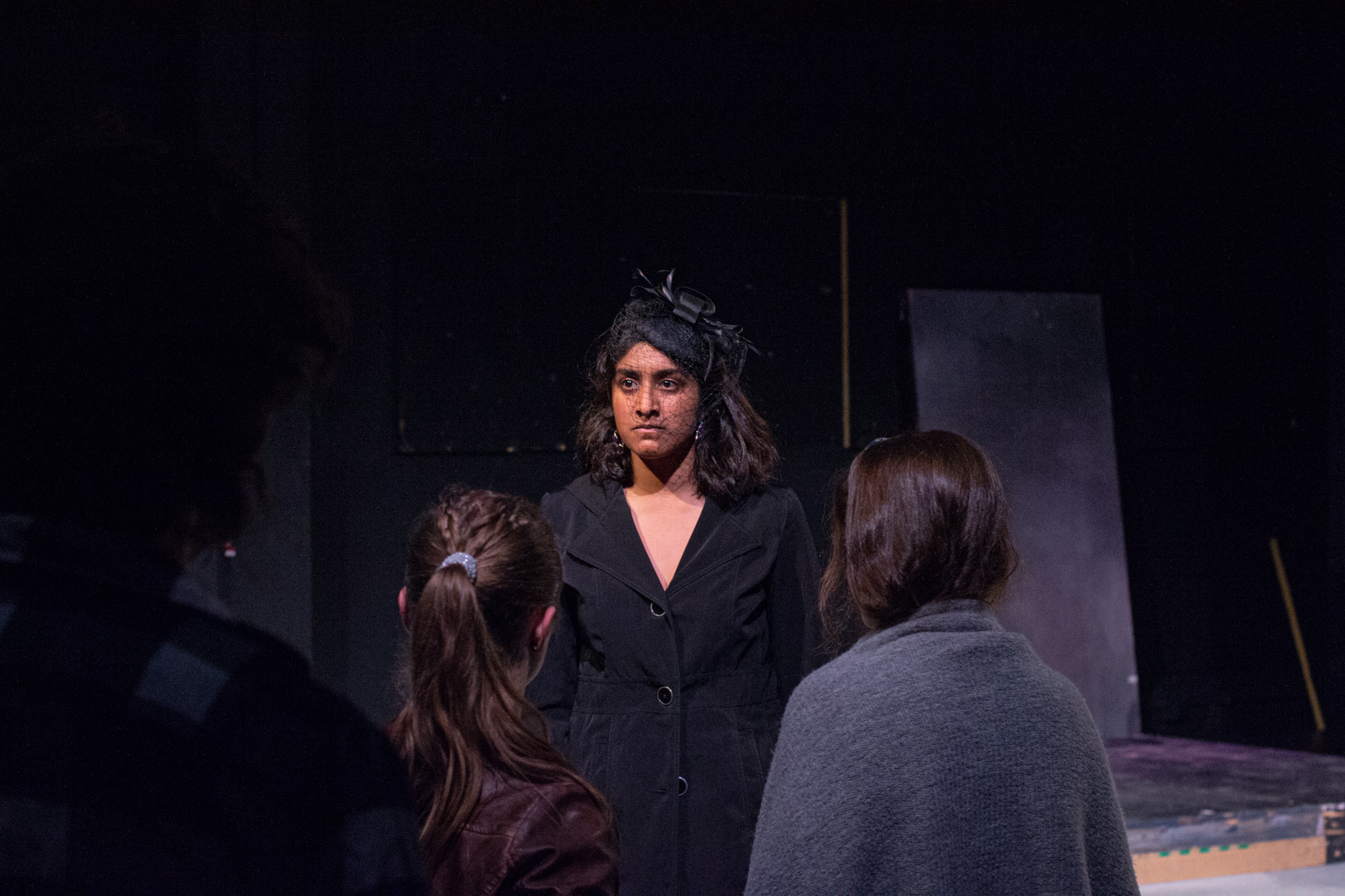
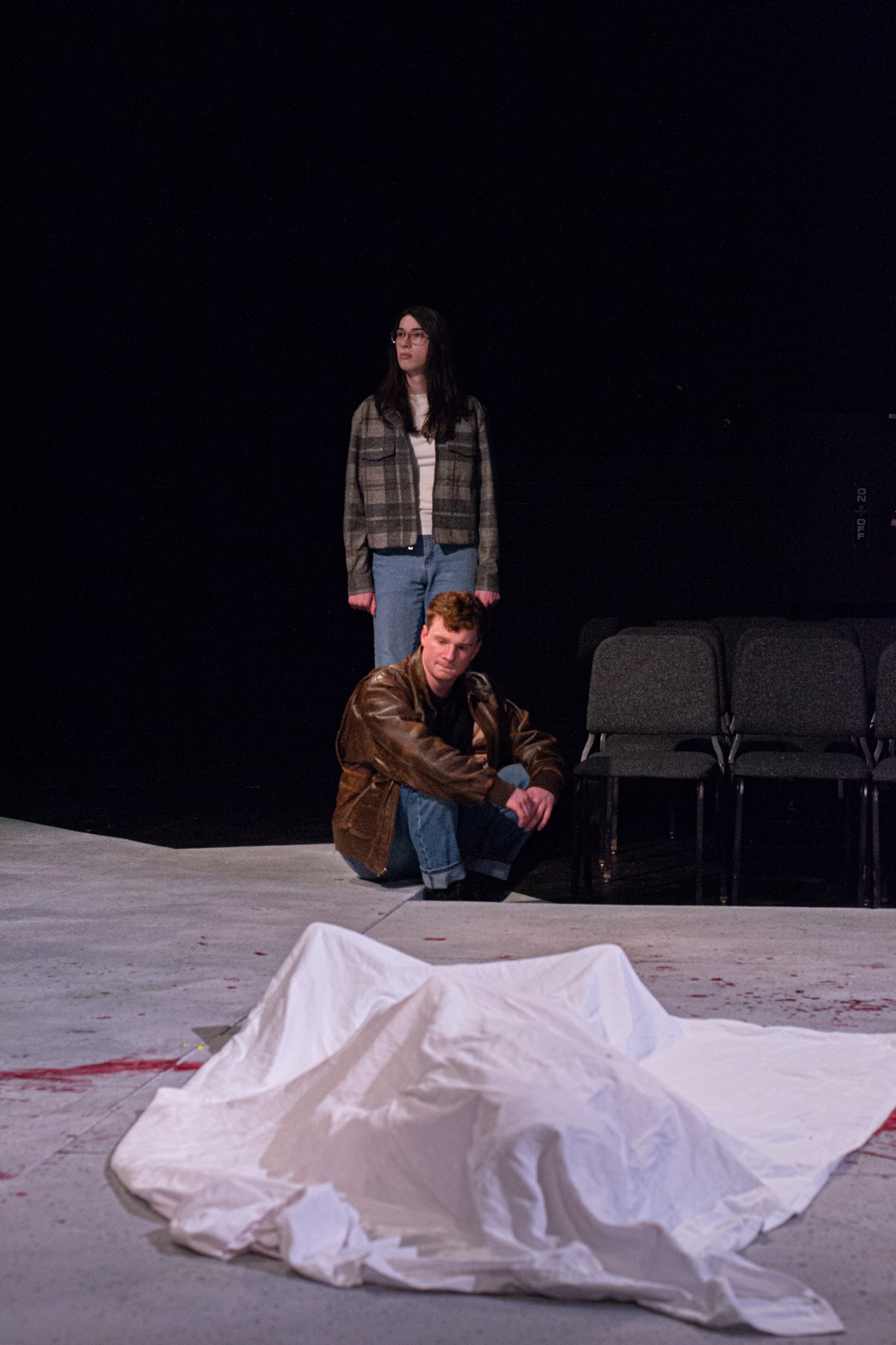

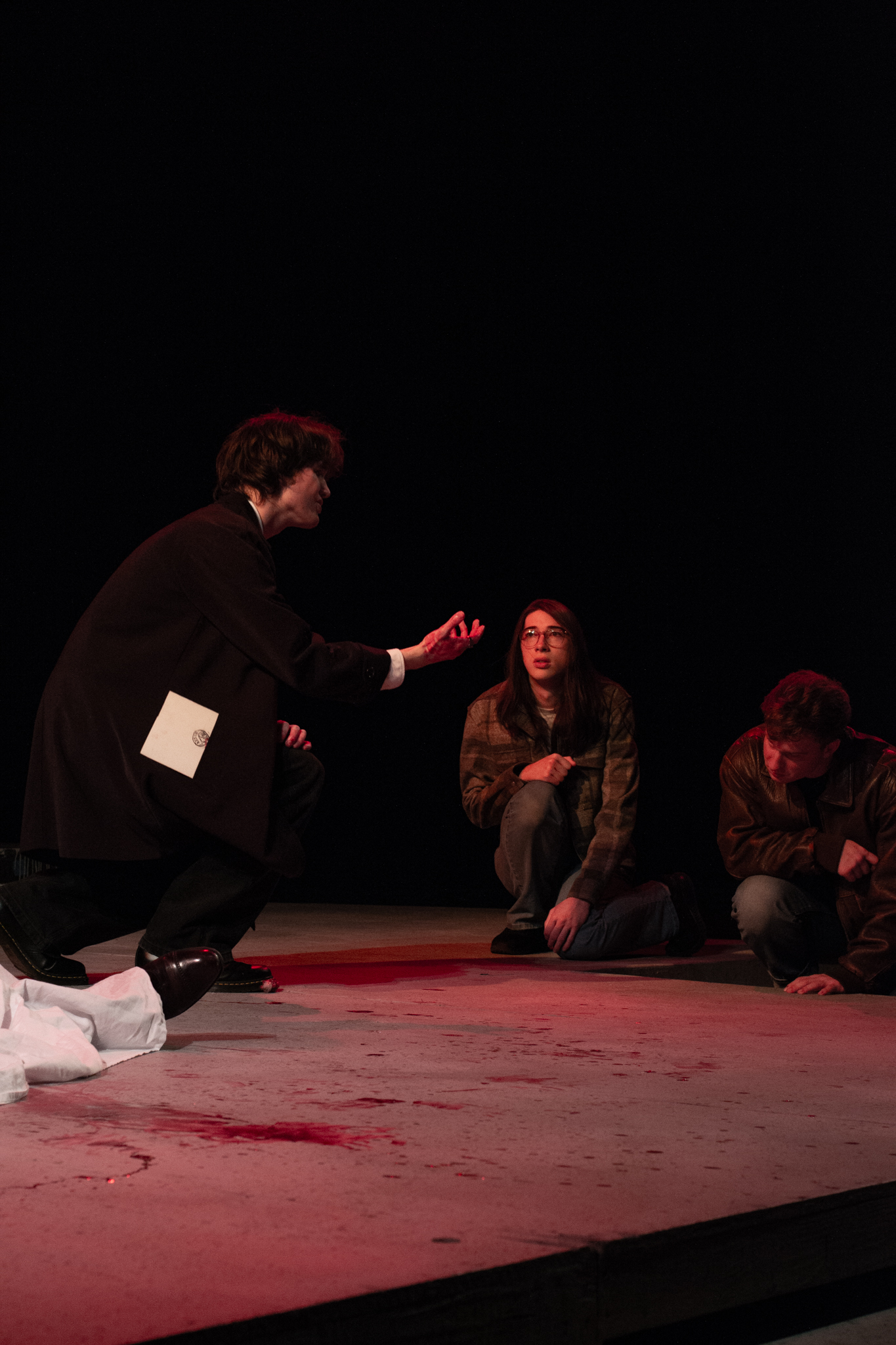
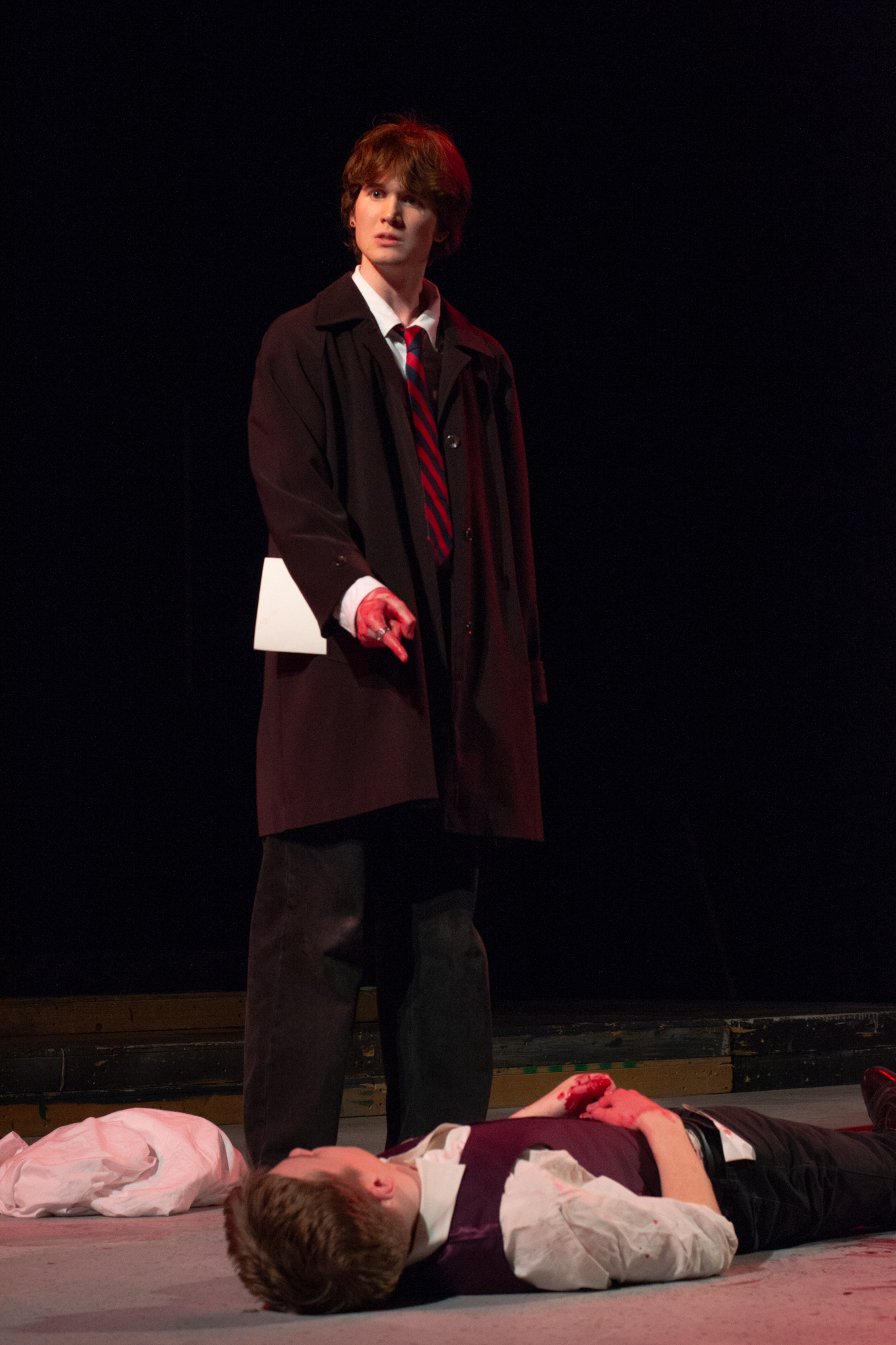
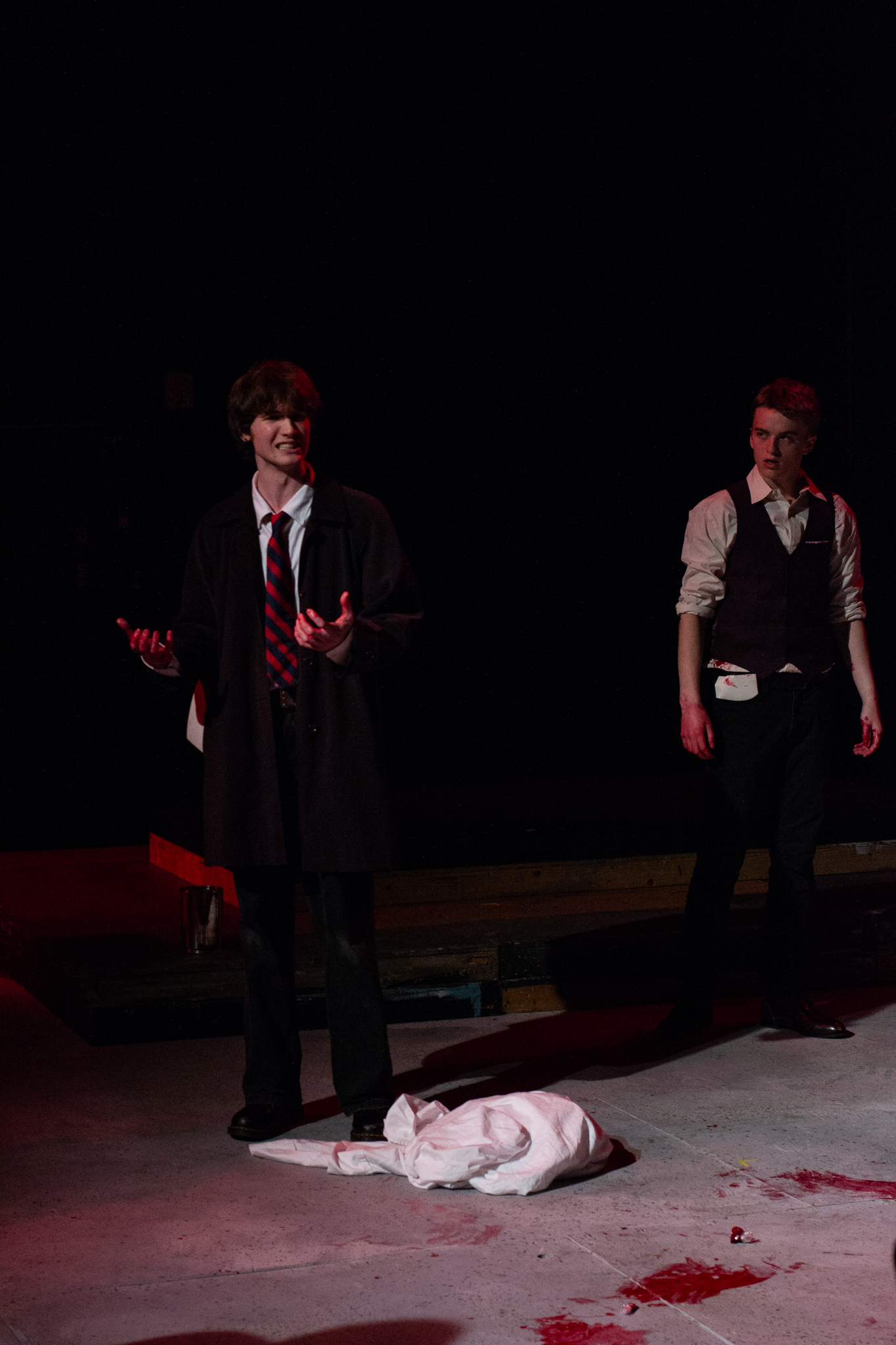
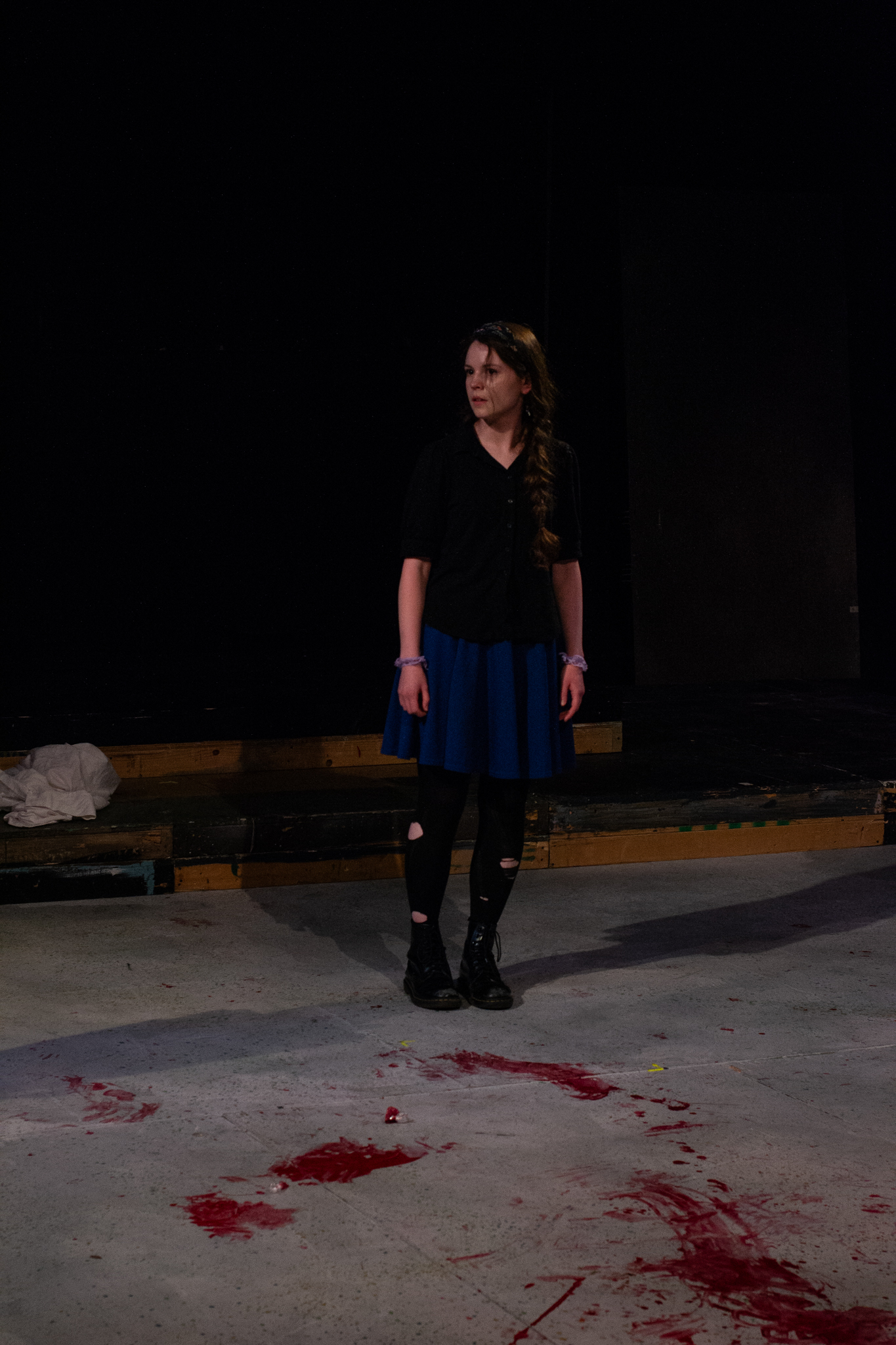

Photography by Angel Jordan
Presented through the Wirtz Center’s Student Performance Project Series
My goal when adapting and directing this production was to tell a highly physical, ensemble-focused, proletarian version of the play’s traditional story, highlighting the common people who were experiencing the civil war surrounding Julius Caesar, not just the generals and powerful people enacting that violence.
To do this, my version of the play took two minor characters – the Soothsayer, who tells Caesar to beware the ides of March, and Lucius, Brutus’s servant – and expanded them to be show-spanning physical narrators of the story, so that the audience would experience the events of the play through their eyes. In practical terms, this meant melding a number of different minor characters into two show-spanning tracks, heavily recontextualizing certain scenes, and staging a prologue, epilogue, and multiple interlude sequences to highlight the common people as they experienced the events of the play outside of its explicit text.
The cut and adapted version of the script used for the production, as well as a video recording, can be provided upon request. My director’s note is below:
I knew very little about Henry Kissinger the day that he died, but I remember being on Twitter (embarrassing!) and reading about other people’s strange cognitive dissonance seeing someone make an illustrious political career out of the deaths of countless innocents abroad, then live, die, and be memorialized relatively without criticism. Obituaries commend him for his ‘skills as a statesman,’ while the hundreds of thousands, if not millions of people who died as a result of his actions get barely a mention, let alone any tangible justice. It seemed, as I was reading about him, to be cosmically unfair.
This show isn’t about Henry Kissinger, but while working with this wonderful group of artists, I’ve been thinking a lot about how we choose to remember the perpetrators of war versus the victims. Something I love about this play is that despite how violently opposed its different factions are to each other, at no point does Shakespeare explicitly frame any of them as the villains – or the heroes – of the story. At their core, every major player has the same goal: to lead Rome in the way that is best for its people. What matters is that their petty disagreements over how best to lead cause them to instead plunge their home into an all-out civil war, ushering in a wave of death and destruction that the ordinary people of Rome likely did not ask for or deserve. My goal in telling this story was not only to tell the stories of Caesar, Brutus, and Antony, but also to tell the stories of those ordinary people.
I think that this play isn’t about Ancient Rome, nor is it about Henry Kissinger, our current president, or any other super-specific modern allegory. To me, it’s about a much simpler truth – how war and political violence are almost always brought about by people with money, status, and institutional power. Meanwhile, war’s worst consequences – death, devastation, the complete upheaval of everything you know and love – tend to fall on the powerless, who are then generally left to pick up the pieces themselves. So when that happens, are we doomed to maintain divisions and restart that same cycle of violence? Or, instead, can we turn to each other, break away from the warmongers that often govern us, and go towards something new?
Thank you for being here,
Philip Cullen
Cast, in order of appearance
Lucius – Ellie Kim
The Soothsayer – Nora Mary Hubert
Cinna, Octavius Caesar, and Others – Eleen Waffner
Portia and Others – Kieran Mulligan
Metellus Cimber and Others – Jordan Wilhelm
Decius Brutus and Others – Elizabeth Hare
Casca and Others – Henry Carson
Calphurnia and Others – Morgan Sperry
Julius Caesar and Others – Finn Callander
Mark Antony – Andrew McCarthy
Brutus – Sahaana Rajesh
Cassius – Dillon Nashelsky
Creative Team
Director, Adapter – Philip Cullen
Producer – Wylde Laden
Stage Manager – Sofia Aguayo
Assistant Stage Manager – Aine Hynes
Fight Choreographer – Sydney MacGilvray
Lift & Movement Consultant – Amanda Elena de la Fuente
Lighting Designer – Noah Cohrs
Costume Designer – Holly Simon
Sound Designer – Arran Kennedy Orive
Props Designer – Jessica Dean
Dramaturg, Graphic Designer – Stephania Kontopanos
Marketing Director – Lane Ruble
 Philip Cullen